Neighbourhood bathhouses in Fes, Marrakesh and towns across Morocco, often visited once a week · Bath · 60 min
Hammam (حمّام)
Moroccan steam bath
A weekly ritual for washing, scrubbing and catching up with friends and neighbours. Cultural practice, not studied for stress. No trials have tested hammam bathing for stress, and its health effects aren't well researched. Warm baths are a common part of winding down, and the NHS suggests a bath as part of relaxing before bed, but the heat carries real risks of dizziness, fainting and heat exhaustion.
Where it comes from
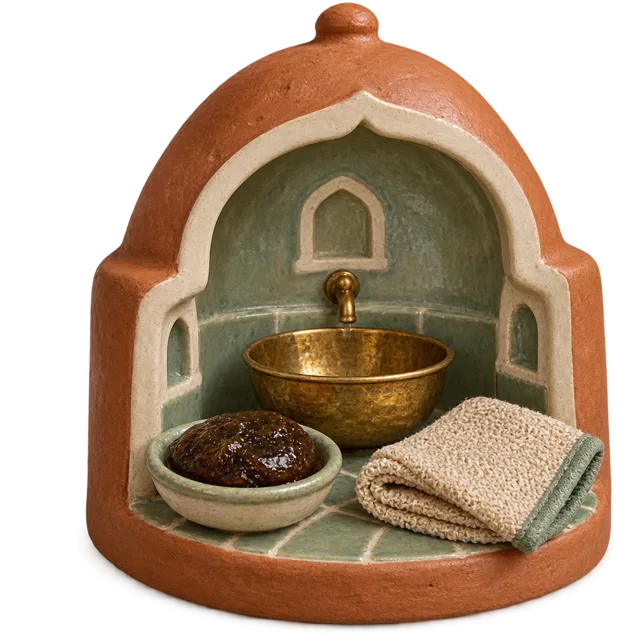
The neighbourhood hammam is part of everyday life in Moroccan towns and cities. People go, often weekly, to steam in warm and hot rooms, wash with olive-based savon beldi and scrub with a kessa mitt. Women's hammams in particular are social spaces where friends, mothers and daughters meet to bathe and talk.
You'll need
- savon beldi (Moroccan black soap)a small scoop
- kessa (rough exfoliating mitt)1
- drinking watera large bottle
How it's made
- 1Adults only. Drink water before you go, and don't go after alcohol or a heavy meal.
- 2Follow the hammam's own rules and the attendants' advice. Start in the warm room and pour warm water over yourself. If you move to the hotter room, keep it short, and leave straight away if you feel dizzy, sick or unwell.
- 3Use the black soap as its label says, rinse it off, then rub gently with the kessa. Go easy: scrubbing hard can leave skin sore, and skip broken or irritated skin and your face.
- 4Rinse with cooler water, then rest somewhere cool, drink water and take your time before you head home.
- 5If you haven't used black soap before, test it first as dermatologists suggest for products you wash off: put a little on the inside of your elbow, leave it for 5 minutes or as long as the label says, rinse, and repeat twice a day for 7 to 10 days (AAD). Don't use it if your skin reacts or you're allergic to anything on the label, and keep it away from your eyes.
What the evidence says
Cultural practice, not studied for stress. No trials have tested hammam bathing for stress, and its health effects aren't well researched. Warm baths are a common part of winding down, and the NHS suggests a bath as part of relaxing before bed, but the heat carries real risks of dizziness, fainting and heat exhaustion.
A real tradition we can document, but nobody has properly tested it.
Who should skip it
- 🤰 Pregnant or breastfeeding? Check with your midwife or doctor first
- 🧒 For adults only (under 18s should skip it)
- 💊 If you have a heart condition, low or high blood pressure, or are pregnant, ask your doctor or midwife before using a hot steam room
- 💊 Some medicines make it harder for your body to handle heat; ask a pharmacist
- 💊 Don't use a hot room after alcohol, and don't stay in if you feel unwell
- 💊 Hard scrubbing can damage skin; avoid it on eczema, sunburn, broken skin or the face
- 🌼 Read the soap's ingredients if you have skin allergies (black soap is often made with olive oil and may contain added fragrance or oils)
- If you feel dizzy, sick or faint, get out, move somewhere cool, lie down with your feet raised, sip water and cool your skin; you should feel better within 30 minutes (NHS)
- Call 999 (UK) or 911 (US) now for signs of heatstroke: still feeling unwell after 30 minutes of cooling, hot skin that isn't sweating, a very high temperature, fast breathing, confusion, a fit, or passing out. While you wait, stay with them and keep cooling them; don't give drinks to anyone who is confused, drowsy or can't swallow safely. If they pass out and are breathing normally, put them in the recovery position; if not, follow the call handler's instructions
- Call 999 (UK) or 911 (US) for chest pain
- See a GP if stress or worry lasts more than a few weeks, affects your daily life, or you feel low, hopeless or unable to cope
- Call 999 (UK) or 911 (US), or go to A&E/the ER, now if you feel you can't keep yourself safe or might harm yourself, or someone's life is at risk (NHS)
- If you need urgent help for your mental health but you're not in immediate danger, call NHS 111 and choose the mental health option, or ask for an urgent GP appointment (UK); in the US, call or text 988
Sources
- Hammam (Wikipedia)
- Moroccan black soap (Wikipedia)
- Heat exhaustion and heatstroke (NHS)
- Stress (NHS (Every Mind Matters))
- Insomnia (NHS)
- How to test skin care products (American Academy of Dermatology)
- Where to get urgent help for mental health (NHS)
- 988 Suicide & Crisis Lifeline (988 Lifeline)
By the Remedies by Culture editorial team · Last checked 2 October 2026 · Not medical advice, and not medically reviewed.