
Cold season · field guide no. 1
How 8 countries fight a cold
Almost every culture has a hot drink, a soup or a steam for the first sniffle. Here are 8 of the best-loved, where they come from, and an honest rating for each. Most are comforting rather than proven, and a few have real evidence behind one ingredient.
| Country | Remedy | Rating |
|---|---|---|
| Mexico | Cinnamon tea with lime and honey | Cultural practice |
| Japan | Soft rice porridge with pickled plum and green onion | Cultural practice |
| South Korea | Korean citron tea | Cultural practice |
| China | Steamed pear with rock sugar | Cultural practice |
| India | Turmeric milk | Cultural practice |
| Poland | Onion syrup | Cultural practice |
| Eastern Europe and the Jewish diaspora | Chicken soup | Cultural practice |
| Jamaica | Lemongrass and ginger tea | Cultural practice |

1. Mexico · Home kitchens across Mexico
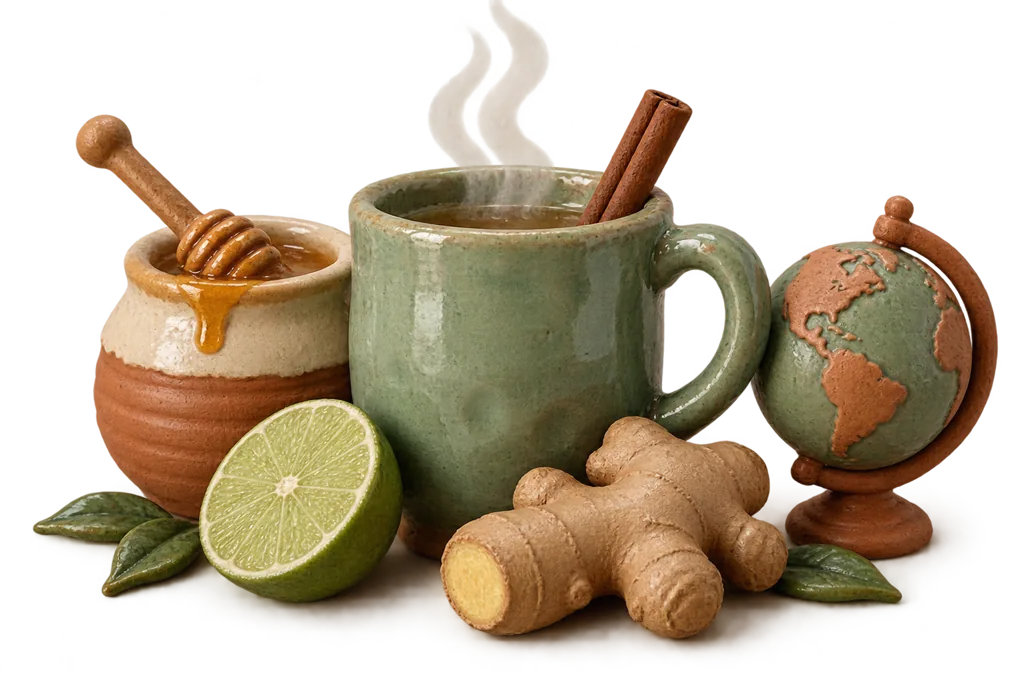
Té de canela con limón
Cinnamon tea with lime and honey
Traditionally sipped hot at the first sniffle to soothe a scratchy throat and warm up on a cold evening. Canela, the soft, flaky Ceylon cinnamon, is a staple in Mexican kitchens, and a pot of it simmering on the stove is a familiar sign that someone at home is under the weather. Many families add lime and honey, and some add a splash of tea or a few cloves.
Cultural practiceCinnamon itself hasn't been shown to help colds. The warm drink with honey and lemon or lime is the kind of soothing drink the NHS suggests for a sore throat, so the comfort is real even if the cinnamon isn't doing the work.Recipe, sources and who should skip it →
2. Japan · Family home cooking across Japan
Okayu with umeboshi and negi
Soft rice porridge with pickled plum and green onion
Traditionally served to someone with a cold or a delicate stomach as gentle, easy-to-eat comfort food. In Japan, okayu is the dish many people remember being given when they were ill: soft, plain and warm. A sour-salty umeboshi on top and a scatter of negi (Japanese long onion) are the classic companions, and ginger is a common addition in winter.
Cultural practiceThere are no studies of okayu for colds. It is simply an easy, warm food that fits the NHS advice to rest, keep warm and eat when you feel able.Recipe, sources and who should skip it →
3. South Korea · Especially popular in winter; yuja grows on Korea's southern coast
Yuja-cha (유자차)
Korean citron tea
Traditionally sipped through the winter to warm up and soothe a scratchy throat. Yuja is a fragrant, knobbly citrus (known as yuzu in Japan). Koreans preserve thin slices in honey or sugar to make a marmalade-like cheong, and a spoonful stirred into hot water is a standard winter drink in homes and cafés.
Cultural practiceYuja tea hasn't been tested for colds. It's a warm, honeyed drink, which the NHS lists as a way to soothe a sore throat.Recipe, sources and who should skip it →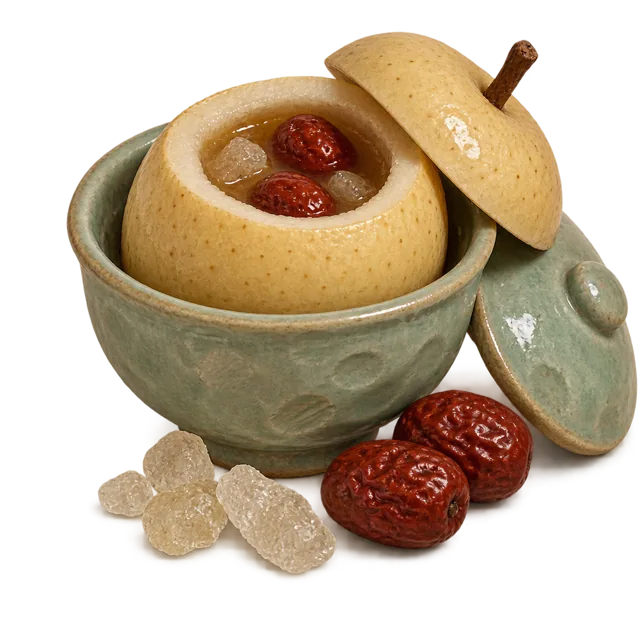
4. China · Home cooking across China, especially in the dry winter months
Bīngtáng dùn xuělí (冰糖炖雪梨)
Steamed pear with rock sugar
Traditionally eaten to soothe a dry, tickly throat and a dry cough in cold, dry weather. In Chinese home cooking, pears are thought of as moistening, and a steamed pear filled with rock sugar is a gentle dish grandparents make when the air turns dry. Many families add jujubes, goji berries or chuanbei (a dried bulb); ours keeps to kitchen basics.
Cultural practiceSteamed pear hasn't been studied for coughs or sore throats. Warm, soft, sweet food can feel soothing, and the NHS suggests soft foods and warm drinks for a sore throat.Recipe, sources and who should skip it →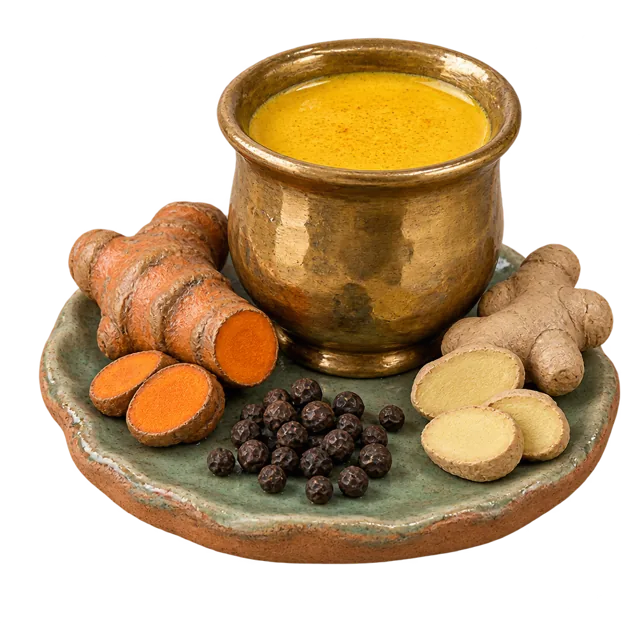
5. India · Households across India, often made by a parent or grandparent
Haldi doodh (हल्दी दूध)
Turmeric milk
Traditionally given at bedtime during a cold to soothe the throat and help someone settle for the night. Haldi doodh is one of the most familiar comfort drinks in Indian homes, where turmeric is part of everyday cooking. It has since travelled the world as 'golden milk' in cafés.
Cultural practiceNCCIH says there isn't good evidence that turmeric helps any health condition, and the amount in a cup of milk is small. It's a warm, comforting bedtime drink; that's as far as the evidence goes.Recipe, sources and who should skip it →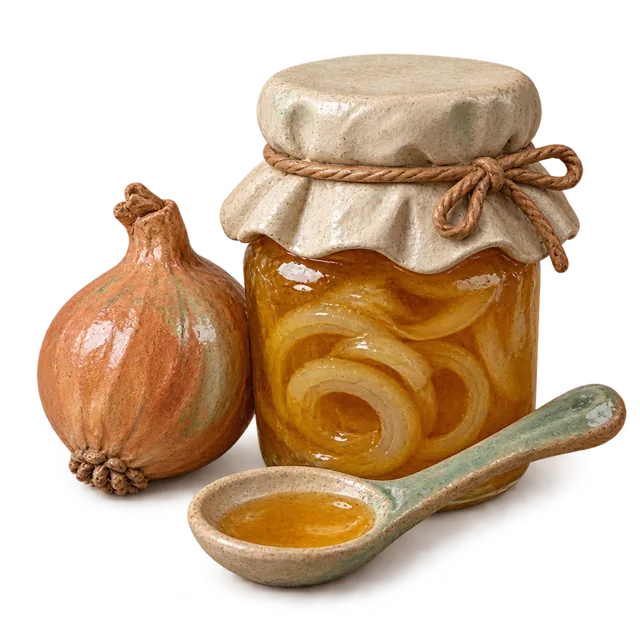
6. Poland · Homes across Poland, a grandmother classic
Syrop z cebuli
Onion syrup
Traditionally taken by the spoonful to soothe a tickly cough in autumn and winter. Syrop z cebuli is the cough syrup many Poles grew up with: sweet, oniony and made in a jar on the windowsill. Every family has its version; some add garlic or lemon.
Cultural practiceOnion syrup itself hasn't been studied. Most of any soothing effect probably comes from the honey, which has some evidence for easing coughs (see our honey and lemon page).Recipe, sources and who should skip it →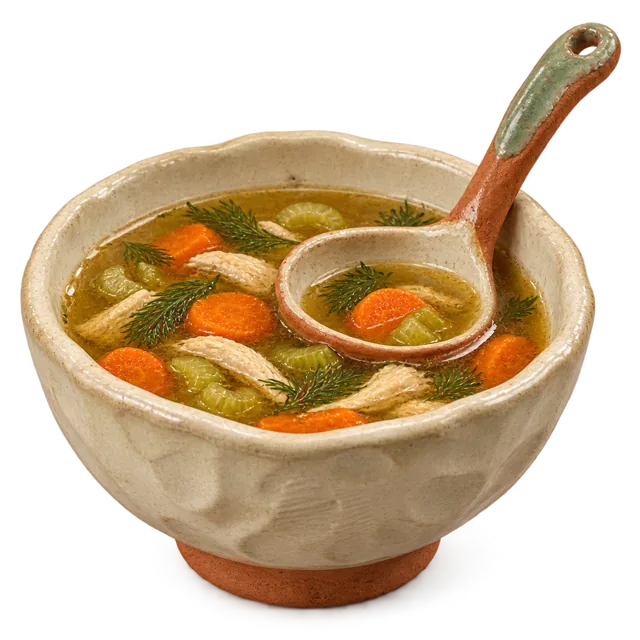
7. Eastern Europe and the Jewish diaspora · Ashkenazi Jewish kitchens, from Poland and Russia to New York and London
Goldene yoich (chicken soup)
Chicken soup
Traditionally served to anyone with a cold, so much so that it's nicknamed 'Jewish penicillin'. A pot of golden chicken soup is the classic Ashkenazi answer to feeling unwell, and the nickname 'Jewish penicillin' is said with affection. Recipes are passed down through families, each with its own view on parsnip and dill.
Cultural practiceA 2000 lab study found chicken soup affected white blood cells in a dish, and a small 1978 study found hot drinks, including chicken soup, briefly helped mucus move. Neither shows it shortens a cold; it's a warm, nourishing food that helps you eat and drink when unwell.Recipe, sources and who should skip it →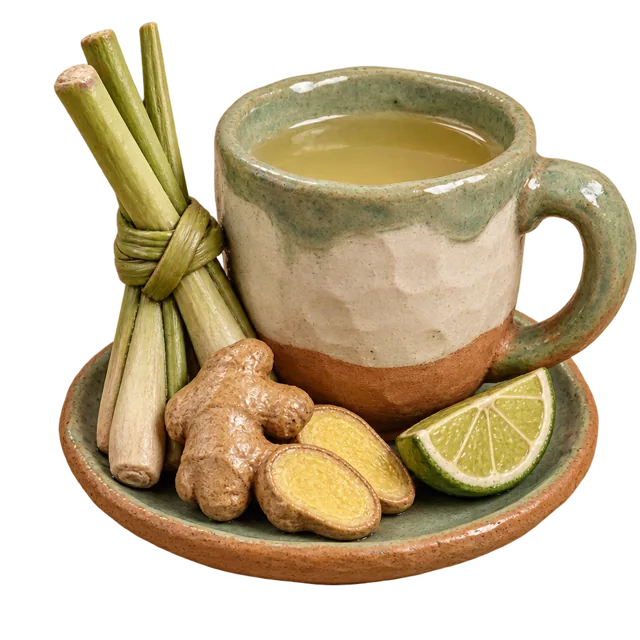
8. Jamaica · Jamaican 'bush tea' tradition, grown in backyards across the island
Fever grass tea
Lemongrass and ginger tea
Traditionally brewed as a warming 'bush tea' when someone feels a cold coming on. In Jamaica, lemongrass is so closely linked with home remedies that it is widely called 'fever grass', and a clump often grows by the back door. Bush teas are an everyday part of Jamaican home care, passed on through families.
Cultural practiceLemongrass tea hasn't been shown to help colds, and despite the name it hasn't been shown to lower a temperature. It's a pleasant, warm drink; for a high temperature, follow NHS advice and speak to a pharmacist.Recipe, sources and who should skip it →
Explore by culture
The Remedy Atlas · digital book
How the world heals, honestly rated
Every remedy for your colds, and 127 in all from 64 cultures, in one beautiful book. Each has its recipe, an honest evidence rating and clear safety flags.