
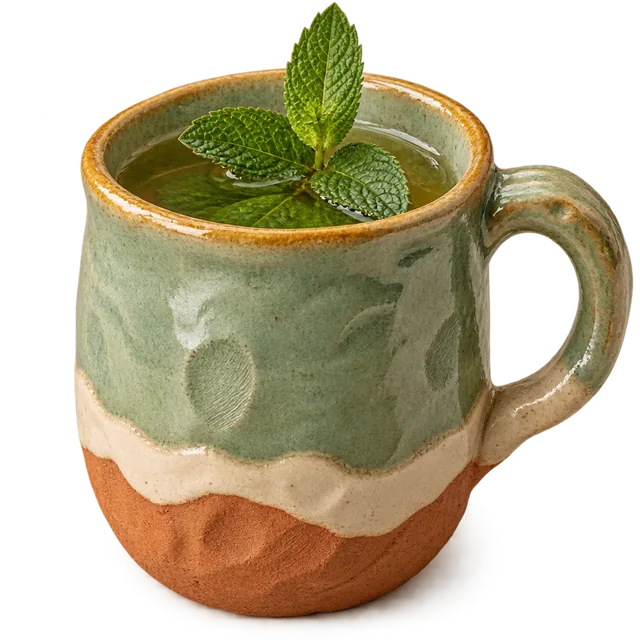
Mitcham, Surrey, once famous for its peppermint fields · Tea · 8 min
Peppermint tea
Peppermint tea
Traditionally sipped after meals to soothe bloating and a gassy, uncomfortable stomach. The EMA recognises peppermint leaf as a traditional remedy for bloating and wind. Peppermint oil capsules have stronger trial evidence for IBS symptoms, but tea hasn't been tested the same way.
Where it comes from
England's Mitcham peppermint was once prized worldwide, and a cup of peppermint tea after dinner is still one of the country's most popular herbal teas.
You'll need
- dried peppermint leaves (or a tea bag)1 to 2 tsp
- just-boiled watera cup (about 200 ml)
How it's made
- 1Put the peppermint in a cup.
- 2Pour over just-boiled water, cover and leave for 5 to 10 minutes.
- 3Strain and sip after a meal.
What the evidence says
The EMA recognises peppermint leaf as a traditional remedy for bloating and wind. Peppermint oil capsules have stronger trial evidence for IBS symptoms, but tea hasn't been tested the same way.
Has an EMA traditional-use monograph: long, documented use, but not proven in trials.
Who should skip it
- 🤰 Fine in normal food amounts in pregnancy
- 🧒 Not for children under 12
- 💊 Can make heartburn and acid reflux worse
- 💊 Never swallow peppermint essential oil; capsules are a separate product
- 🌼 Mint-family (Lamiaceae) allergy
- Symptoms keep coming back or last more than 3 weeks
- Unexplained weight loss, difficulty swallowing, or blood in your stool or vomit
- Severe or sudden tummy pain
- Bloating that won't go away, especially with loss of appetite
Sources
- Menthae piperitae folium (peppermint leaf) herbal monograph (EMA)
- Peppermint oil (NCCIH)
- The impact of peppermint oil on the irritable bowel syndrome: a meta-analysis of the pooled clinical data (BMC Complement Altern Med, 2019) (PubMed)
By the Remedies by Culture editorial team · Last checked 30 September 2026 · Not medical advice, and not medically reviewed.


