
Field guide
How 19 countries settle an upset stomach
Peppermint tea in Britain, fennel seeds in India, soft rice porridge in Japan: here's how the world settles an upset stomach, where each tradition comes from and what the evidence says. Small sips of fluid matter most.
| Country | Remedy | Rating |
|---|---|---|
| Japan | Soft rice porridge with pickled plum and green onion | Cultural practice |
| Thailand | Thai hot ginger drink | Studied |
| United Kingdom | Peppermint tea | Traditional |
| India | Fennel seeds after meals | Traditional |
| Spain | Chamomile tea | Traditional |
| Senegal | Kinkeliba leaf tea | Cultural practice |
| Iran | Saffron rock-sugar tea | Cultural practice |
| Pakistan | Carom seed water | Cultural practice |
| Peru | Barley and flaxseed street tonic | Cultural practice |
| Brazil | Boldo leaf tea | Traditional |
| Sweden | Warm dried bilberry soup | Traditional |
| Greece | Greek mountain tea | Traditional |
| Morocco | Moroccan mint tea | Cultural practice |
| Jordan | Black tea with sage | Traditional |
| Vietnam | Artichoke tea | Traditional |
| Portugal | Lemon verbena tea | Traditional |
| China | Hawthorn berry drink | Cultural practice |
| South Korea | Green plum tea | Cultural practice |
| Cuba | Guava leaf tea | Cultural practice |

1. Japan · Family home cooking across Japan
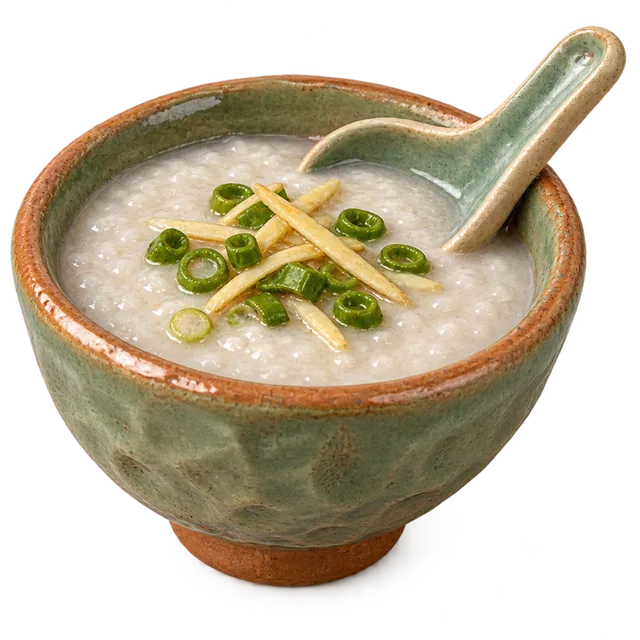
Okayu with umeboshi and negi
Soft rice porridge with pickled plum and green onion
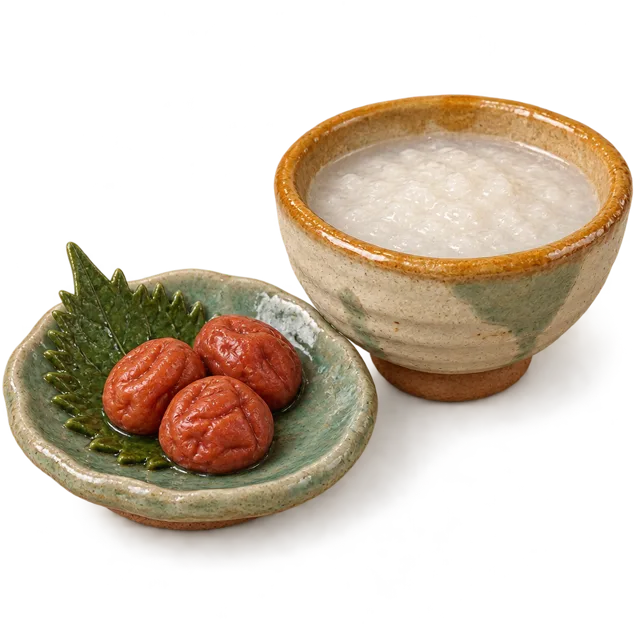
Traditionally served to someone with a cold or a delicate stomach as gentle, easy-to-eat comfort food. In Japan, okayu is the dish many people remember being given when they were ill: soft, plain and warm. A sour-salty umeboshi on top and a scatter of negi (Japanese long onion) are the classic companions, and ginger is a common addition in winter.
Cultural practiceThere are no studies of okayu for colds. It is simply an easy, warm food that fits the NHS advice to rest, keep warm and eat when you feel able.Recipe, sources and who should skip it →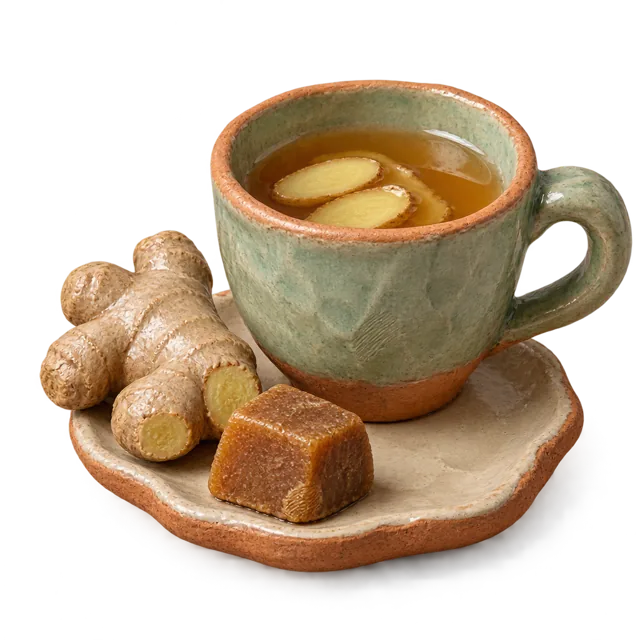
2. Thailand · Street stalls and home kitchens across Thailand
Nam khing (น้ำขิง)
Thai hot ginger drink
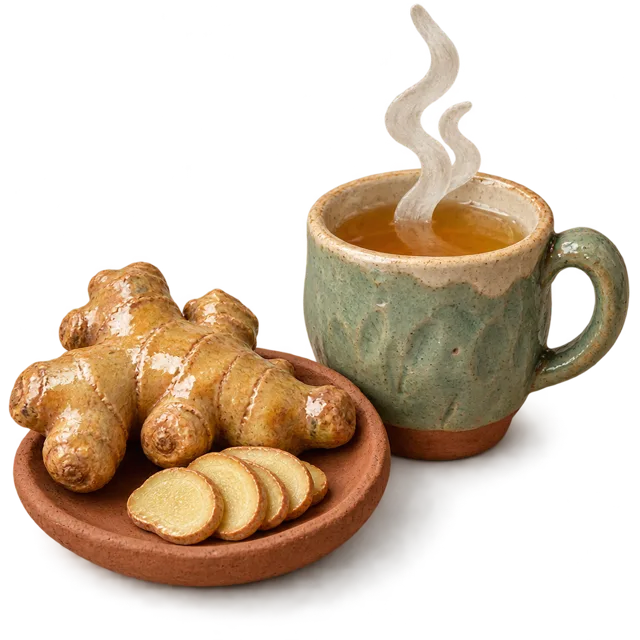
Traditionally sipped to settle a queasy stomach and after a heavy meal. Nam khing, simply 'ginger water', is sold hot at Thai markets and made at home when someone feels off-colour. It's often served with a little sugar, and sometimes with soft tofu as a sweet snack.
StudiedGinger is traditionally used for nausea. EMA recognises a specific ginger powder preparation for adult motion sickness, but NCCIH says most motion-sickness studies found no benefit. These findings do not establish that homemade ginger tea works.Recipe, sources and who should skip it →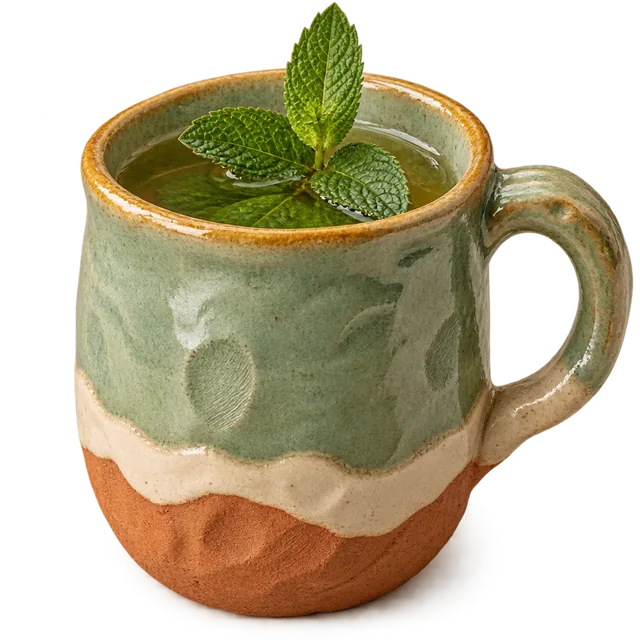
3. United Kingdom · Mitcham, Surrey, once famous for its peppermint fields
Peppermint tea
Peppermint tea
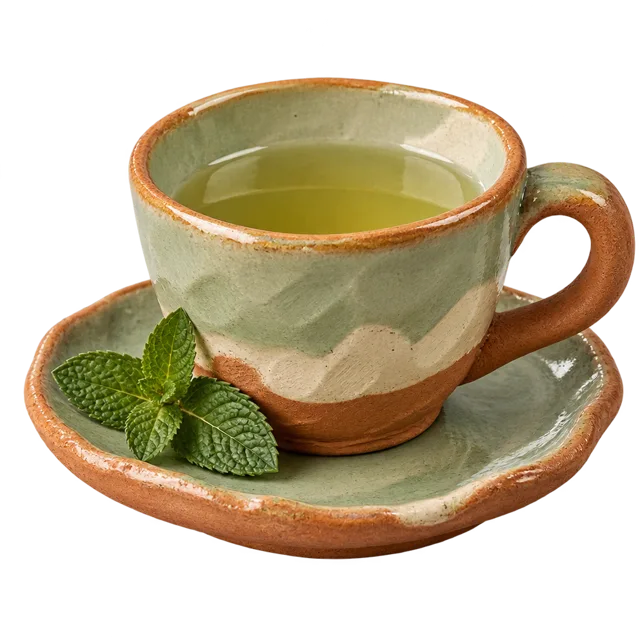
Traditionally sipped after meals to soothe bloating and a gassy, uncomfortable stomach. England's Mitcham peppermint was once prized worldwide, and a cup of peppermint tea after dinner is still one of the country's most popular herbal teas.
TraditionalThe EMA recognises peppermint leaf as a traditional remedy for bloating and wind. Peppermint oil capsules have stronger trial evidence for IBS symptoms, but tea hasn't been tested the same way.Recipe, sources and who should skip it →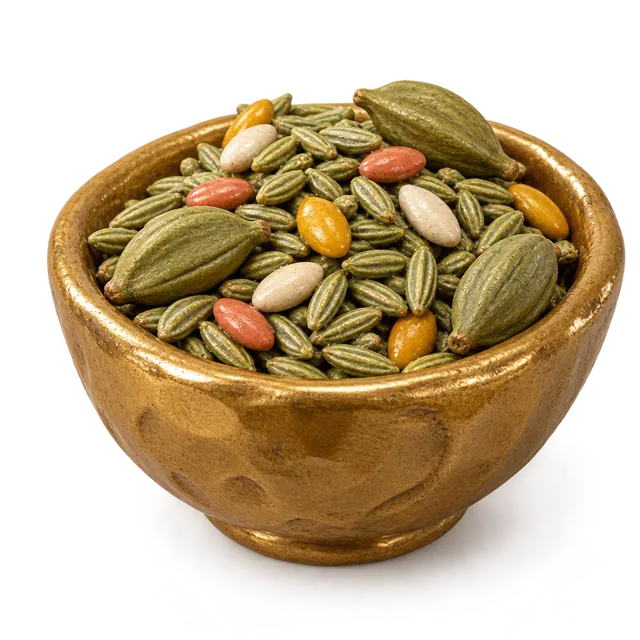
4. India · Restaurants and homes across India, served as mukhwas after meals
Saunf (सौंफ)
Fennel seeds after meals
Traditionally chewed after meals to freshen the breath and help digestion feel settled. Leave almost any Indian restaurant and you'll find a bowl of saunf or colourful mukhwas by the door. At home, a small pinch of fennel after a rich meal is second nature for many families.
TraditionalThe EMA recognises fennel as a traditional remedy for bloating and wind. Its advice covers fennel tea and extracts; chewing a pinch of seeds is ordinary food use.Recipe, sources and who should skip it →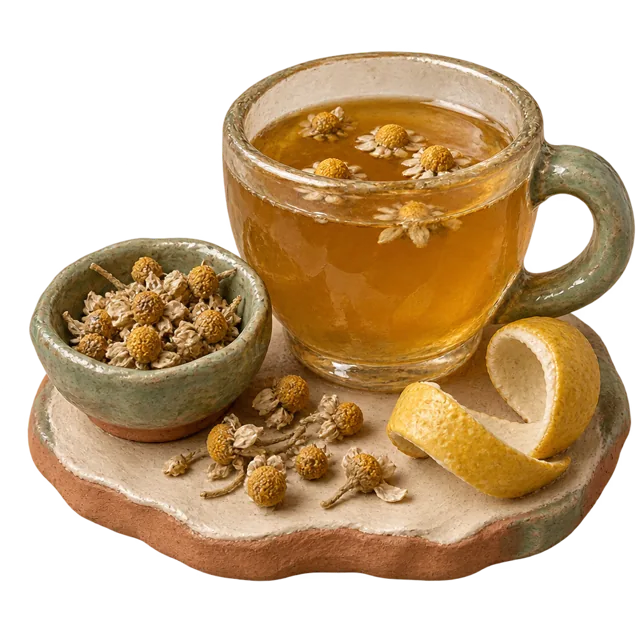
5. Spain · Cafés and homes across Spain, ordered after a big lunch
Manzanilla
Chamomile tea
Traditionally sipped after a heavy meal to settle the stomach. In Spain, ordering 'una manzanilla' after a long lunch is completely ordinary; it's as common in bars and cafés as coffee. Many grandmothers also keep a jar of dried flowers for upset tummies.
TraditionalThe EMA recognises chamomile as a traditional remedy for minor stomach complaints such as bloating and mild cramps. Good clinical trials for this use are scarce.Recipe, sources and who should skip it →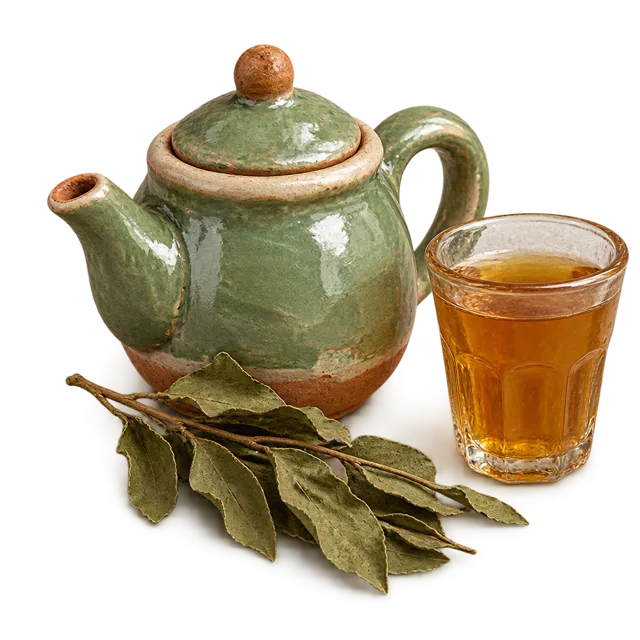
6. Senegal · Senegal, the Gambia and Mali, where it is a popular breakfast tea
Kinkeliba (sekhew)
Kinkeliba leaf tea
Traditionally drunk warm after heavy meals or at breakfast to settle the stomach. Kinkeliba is a shrub that grows wild across the Sahel. Its leaves make a mild, slightly woody tea that many Senegalese families drink with bread in the morning instead of coffee.
Cultural practiceCultural practice, not studied for digestion. A 2024 review lists many traditional uses and lab or animal findings, but there are no good human trials for digestion, and the evidence on its safety in people is limited.Recipe, sources and who should skip it →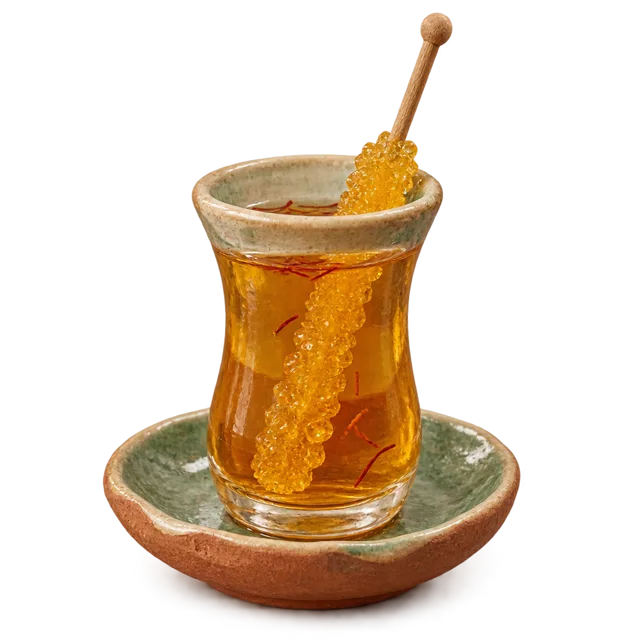
7. Iran · Iranian homes, where saffron nabat is a familiar cupboard staple
Chai nabat (چای نبات)
Saffron rock-sugar tea
Traditionally sipped for a sore tummy, after a shock, or during period pain, as a warm, sweet comfort. Nabat is crystallised sugar, often grown on a wooden stick and coloured with a little saffron. In many Iranian households it is a comfort drink, offered for a stomach ache, menstrual cramps or a shock, and stirred into tea until the crystals melt.
Cultural practiceCultural practice, not studied: chai nabat itself hasn't been tested. A Cochrane review found no high-quality evidence that any dietary supplement eases period pain. The NHS suggests warmth, gentle exercise and pain relief such as ibuprofen for period pain; the comfort here mostly comes from a warm drink and a rest.Recipe, sources and who should skip it →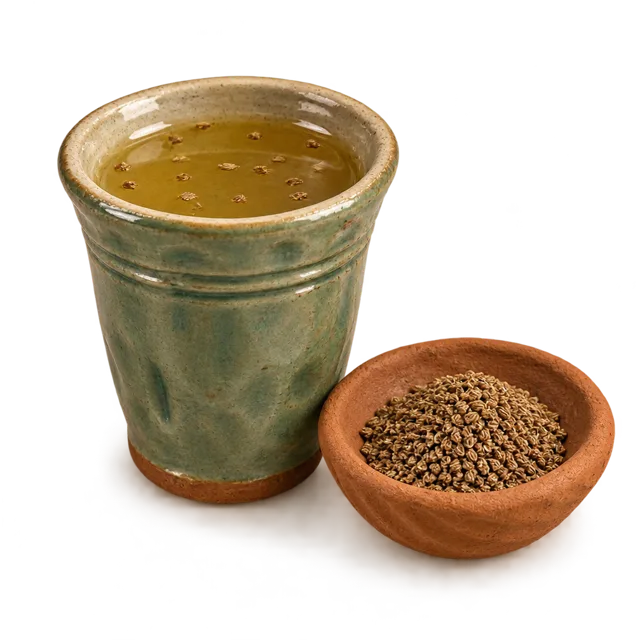
8. Pakistan · Pakistani and North Indian kitchens, made after heavy meals
Ajwain ka pani (اجوائن کا پانی)
Carom seed water
Traditionally sipped after rich food for gas, bloating and a heavy stomach. Ajwain, a tiny seed with a strong thyme-like taste, is a staple of Pakistani cooking, where it is added to pakoras, parathas and lentils to make them 'easier to digest'. Ajwain water is the grandmother's fix when someone has overeaten.
Cultural practiceCultural practice, not studied in good human trials: lab and animal studies are the main evidence. The NHS suggests eating smaller meals more slowly and cutting down on foods that give you wind if you often feel bloated.Recipe, sources and who should skip it →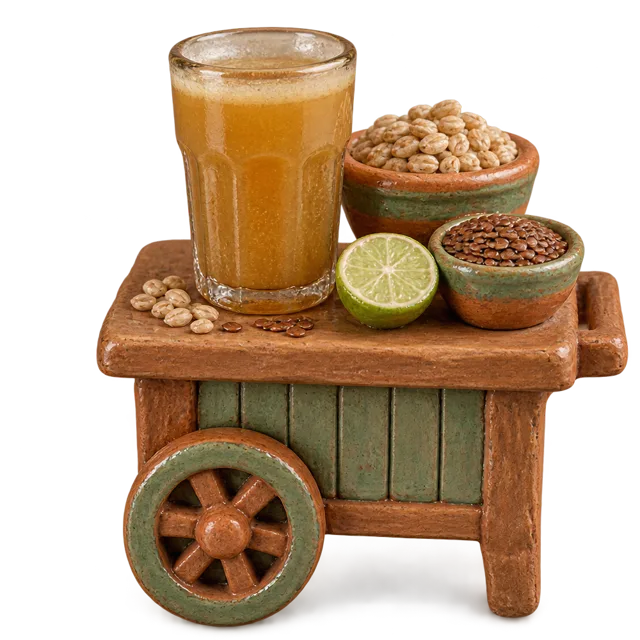
9. Peru · Street carts in Lima and across Peru, where emolienteros sell it hot at dawn and dusk
Emoliente
Barley and flaxseed street tonic
Traditionally drunk hot on chilly mornings and evenings for colds and to settle the stomach. Emoliente is a thick, warming drink sold from little wooden carts on Peruvian street corners. The emolientero ladles a barley and flaxseed base into a glass, then adds lime, sweetener and your choice of herbal extracts. Many Peruvians drink it in winter when the damp garúa mist rolls in.
Cultural practiceCultural practice, not studied: no trials have tested emoliente. A warm drink fits NHS self-care advice for colds. The EMA's assessment of linseed for constipation covers whole seeds taken with liquid (10 to 15 g, 2 to 3 times a day); there's no evidence that this mixed, boiled and strained street drink, with much less flaxseed, has the same effect.Recipe, sources and who should skip it →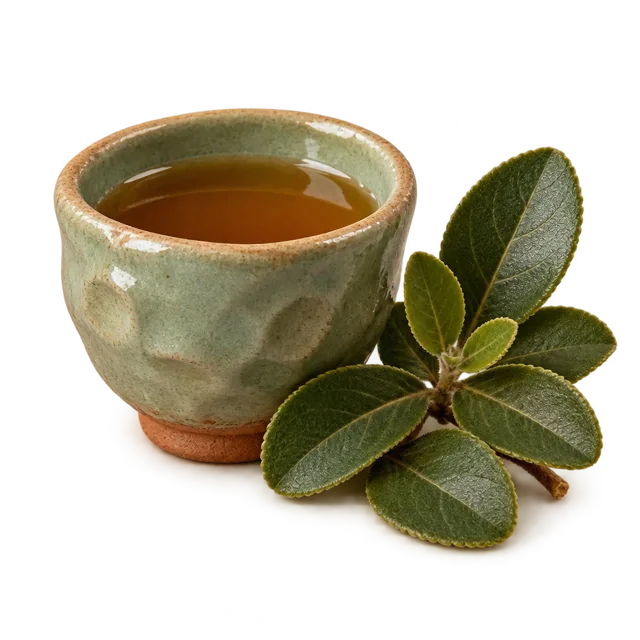
10. Brazil · Brazil and Chile, where boldo tea bags are a pharmacy and supermarket staple
Chá de boldo
Boldo leaf tea
Traditionally drunk after a heavy meal for indigestion. Boldo is known in Brazil as the bitter tea for indigestion; 'tomar um boldo' (have a boldo) is what you're told after a feast. Two plants share the name: Chilean boldo (Peumus boldus), sold dried, and Brazilian boldo (a Plectranthus) grown in backyards. This entry covers the Chilean one, which is the one the EMA has assessed.
TraditionalThe EMA recognises Chilean boldo leaf as a traditional herbal medicine for indigestion and mild gut spasms, based on long use rather than strong trials. It hasn't assessed Brazilian backyard boldo.Recipe, sources and who should skip it →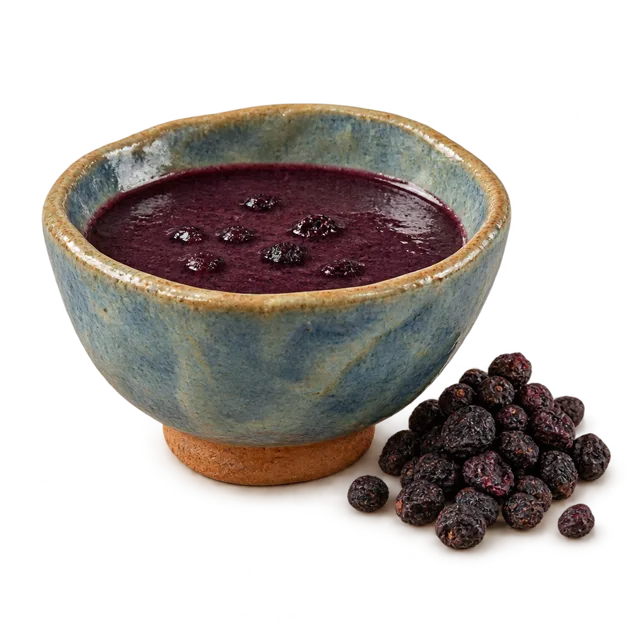
11. Sweden · Sweden and the wider Nordic region, where bilberries grow wild in the forests
Blåbärssoppa på torkade blåbär
Warm dried bilberry soup
Traditionally sipped warm for a mild upset stomach with loose stools. Blåbärssoppa (bilberry soup) is a Swedish classic, drunk warm by skiers in the Vasaloppet race, and in Sweden and Finland it's often thought of as good food for an upset stomach. The everyday soup can be made from fresh or frozen berries; this version uses dried bilberries, the form the EMA has assessed.
TraditionalThe EMA recognises dried bilberry fruit as a traditional herbal medicine for mild diarrhoea, based on long use rather than strong trials. Fresh or frozen berries aren't covered by that assessment.Recipe, sources and who should skip it →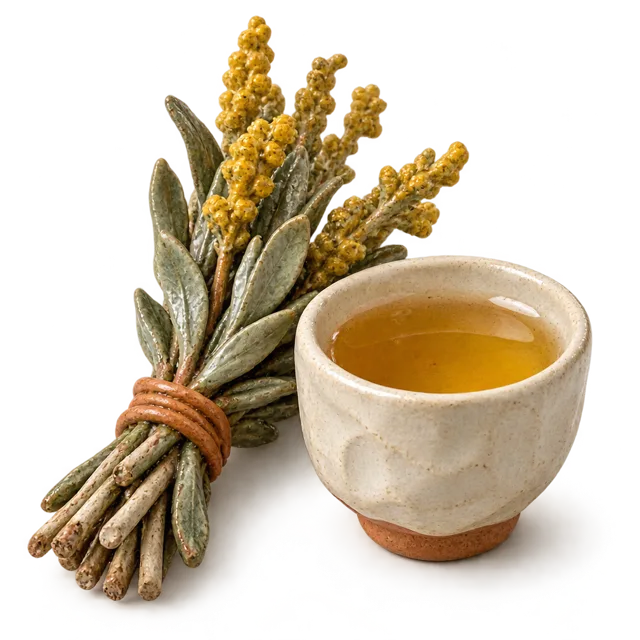
12. Greece · The mountains of Greece and the Balkans, where Sideritis is gathered in summer and sold in bundles
Tsai tou vounou (τσάι του βουνού)
Greek mountain tea
Traditionally drunk hot in winter for coughs and colds, and after meals for a mild stomach upset. Every Greek kitchen seems to have a bundle of tsai tou vounou, the dried silvery stems and yellow flowers of Sideritis gathered on mountains such as Olympus and Parnassus. Shepherds once brewed it on hillsides, and it's still the tea Greek families make when someone is coughing.
TraditionalThe EMA recognises Greek mountain tea (Sideritis) as a traditional herbal medicine for coughs with a cold and mild stomach and gut discomfort, based on long use rather than strong trials.Recipe, sources and who should skip it →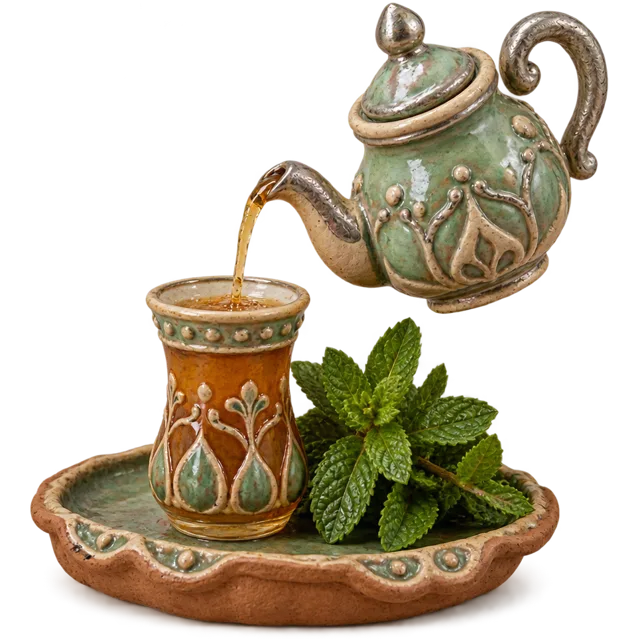
13. Morocco · Homes and cafés across Morocco, poured from a height into small glasses after a meal
Atay bi naanaa (أتاي بالنعناع)
Moroccan mint tea
Traditionally served after meals, and especially after rich ones, to settle the stomach and as a sign of welcome. Mint tea, atay, is the drink of hospitality in Morocco and across the Maghreb: gunpowder green tea brewed with fresh spearmint and sugar and poured from a height so it foams in the glass. It's offered to guests, served at the end of a meal and drunk throughout the day. Recipes change from home to home, and some families add other fresh herbs in winter.
Cultural practiceCultural practice, not studied. No trials have tested Moroccan mint tea for indigestion or bloating. It's made with spearmint, not peppermint, so the evidence on peppermint oil for gut symptoms doesn't carry over. The NHS suggests cutting down on caffeine and sugary foods if you're often bloated, and this tea has both.Recipe, sources and who should skip it →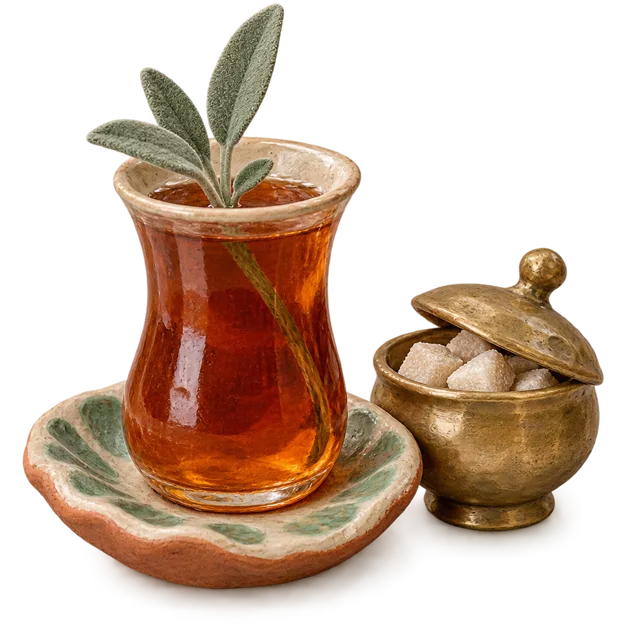
14. Jordan · Homes across Jordan and the wider Levant, where a sprig of sage goes into the teapot after a meal
Shai bil maramiya (شاي بالمرمية)
Black tea with sage
Traditionally drunk after meals, or when the stomach feels upset or heavy. Maramiya, sage, grows wild on the hills of Jordan and Palestine and is sold in bunches in markets across the Levant. A few leaves slipped into a pot of sweet black tea is served after meals in many Jordanian and Palestinian households, and it's a familiar home choice when someone has a stomach ache.
TraditionalTraditional use. The EMA recognises sage leaf tea as a traditional herbal medicine for mild indigestion such as heartburn and bloating, in adults, based on long use rather than trials (its dose is 1 to 2 g of leaf in 150 ml of water, up to 3 times a day, for no more than 2 weeks without advice, and licensed products must keep thujone below a set daily limit). There are no good trials of sage tea for indigestion, and this sweet black-tea version hasn't been studied. The wild maramiya sold in the Levant is often Greek sage (Salvia fruticosa), for which the EMA didn't adopt a monograph, so this recipe is our adaptation of the regional tea using labelled common sage.Recipe, sources and who should skip it →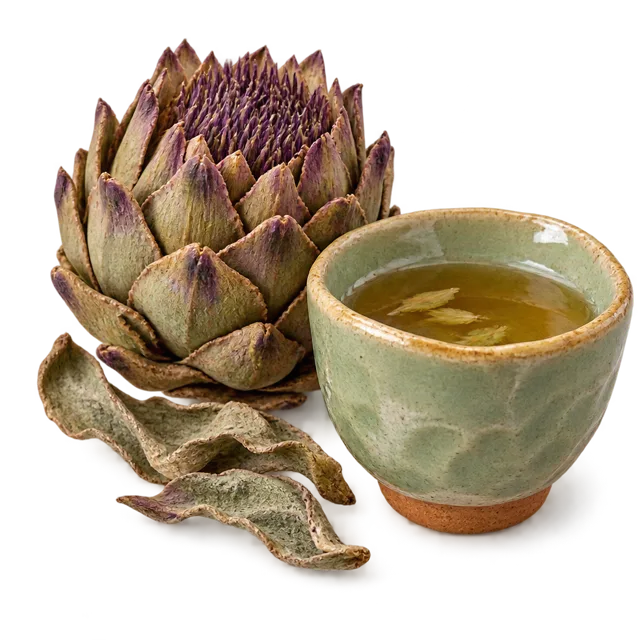
15. Vietnam · Đà Lạt in Vietnam's cool Central Highlands, where artichokes are grown and dried for tea
Trà atisô
Artichoke tea
Traditionally drunk after meals to ease a full, heavy stomach and bloating. Vietnam's Ministry of Industry and Trade magazine says the French brought artichokes to Vietnam around the 1940s, and they're now grown most widely around Đà Lạt. The flowers are eaten as a vegetable, and the leaves, stems, roots and flowers are dried and sold as trà atisô tea bags, described locally as a 'cooling' tea.
TraditionalTraditional use. The EMA recognises artichoke leaf tea as a traditional herbal medicine for indigestion with a feeling of fullness, bloating and wind, based on long use. This recipe uses the adult amount from its monograph (1.5 g in 150 ml). The EMA's assessment covers the leaf only, so teas made from the flowers, stems or roots are outside it. A 6-week trial of a concentrated artichoke leaf extract in 247 adults with indigestion found modestly more improvement than placebo, but it used an extract, not tea, so this drink hasn't been properly tested.Recipe, sources and who should skip it →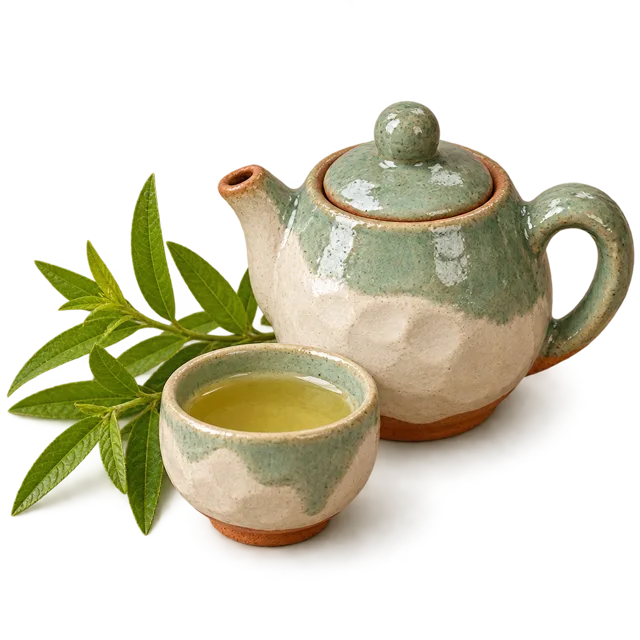
16. Portugal · Portuguese gardens and tea shops, where lemon verbena is sold for an after-dinner chá
Chá de lúcia-lima
Lemon verbena tea
Drunk after dinner as a digestive chá, and traditionally used to help with winding down for sleep. Lúcia-lima, called bela-luísa in the Algarve, is a lemon-scented shrub from South America that has long been grown in Portuguese gardens. Portuguese tea merchants sell the dried leaves as a digestive chá, steeped in hot water after a meal.
TraditionalTraditional use. The EMA recognises lemon verbena leaf as a traditional herbal medicine for mild stress, to aid sleep and for mild bloating and wind, based on long use. This recipe uses the adult amount for sleep from its monograph (1 to 2 g in 200 ml of boiling water, half an hour before bed). In one Iranian trial in 100 people with insomnia, a lemon verbena syrup taken for 4 weeks improved self-rated sleep compared with placebo, but no trial has tested the tea itself.Recipe, sources and who should skip it →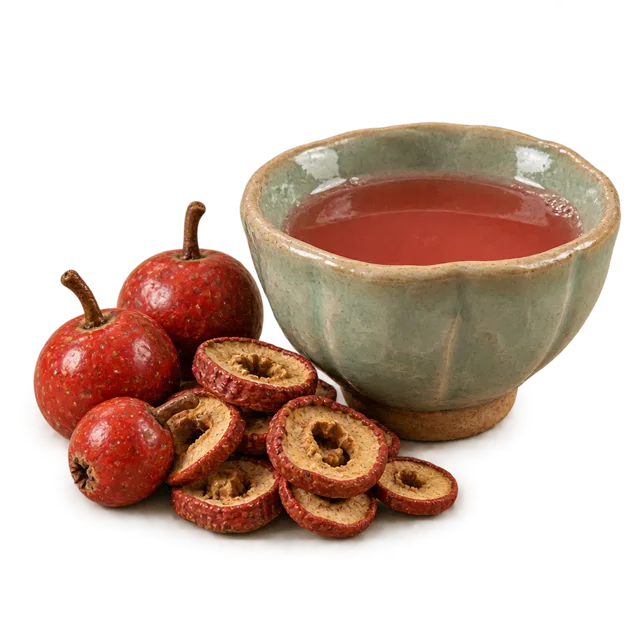
17. China · Homes across northern China, where hawthorn also turns up in tanghulu, haw flakes and other sweets
Shān zhā shuǐ (山楂水)
Hawthorn berry drink
Traditionally drunk after rich, fatty or meaty meals to help a full, heavy stomach. Bright red Chinese hawthorn fruit, shan zha, is a favourite sour-sweet flavour in northern China, candied on sticks as tanghulu or pressed into the paper-thin haw flakes many children grow up with. Dried slices simmered into a tart drink are a familiar after-dinner choice when a meal has been too rich, and in traditional Chinese medicine the dried fruit has long been used as a digestive aid.
Cultural practiceCultural practice, not studied. No good human trials have tested hawthorn fruit drinks for indigestion; most research on hawthorn is on leaf-and-flower extracts for heart problems, which is a different use. Eating smaller, less fatty meals is the NHS's main self-help advice for indigestion.Recipe, sources and who should skip it →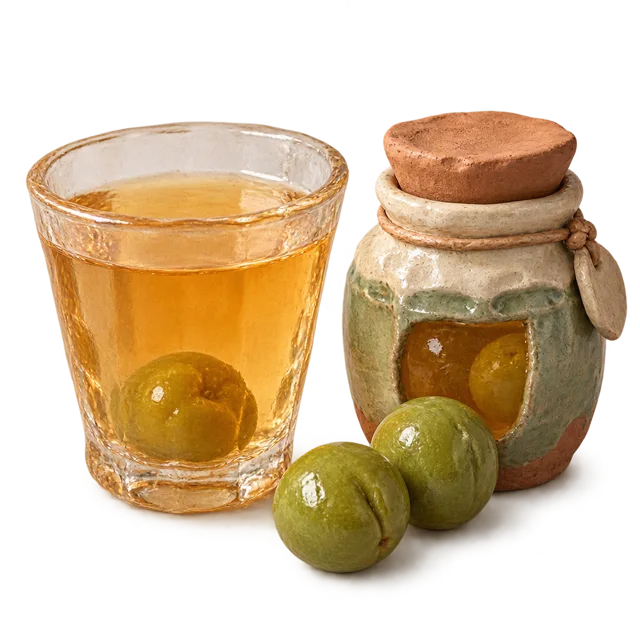
18. South Korea · Korean homes, where a jar of maesil syrup sits in the fridge for when someone's stomach feels 'blocked'
Maesil-cha (매실차)
Green plum tea
Traditionally sipped when food feels 'stuck' or the stomach is unsettled after eating, and as a cooling summer drink. Maesil are the green fruit of the East Asian plum (really a kind of apricot) and ripen in early summer. Many Korean households make or buy maesil-cheong, a sweet, sour syrup of the fruit and sugar, and stir a spoonful into water when someone feels che-haetda, the Korean sense of food being 'blocked' after eating too fast or too much.
Cultural practiceCultural practice, not studied. There are no good human trials of maesil tea for indigestion or nausea. The syrup is roughly half sugar, and it hasn't been shown to settle the stomach.Recipe, sources and who should skip it →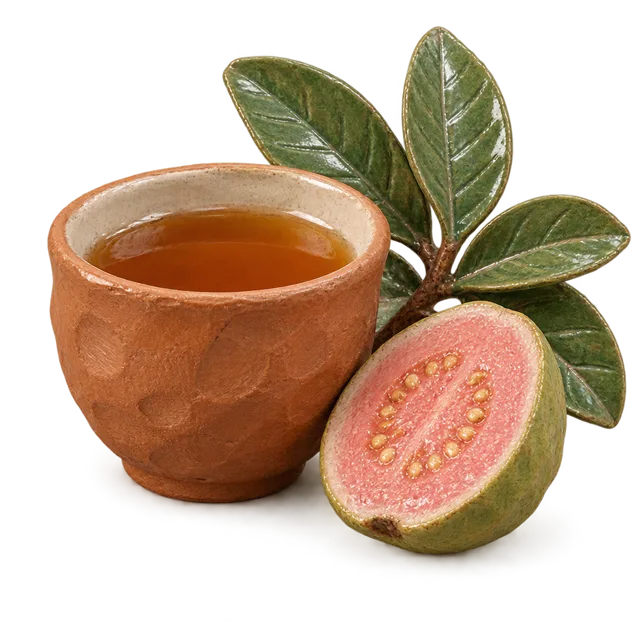
19. Cuba · Cuban backyards, where a guava tree often grows by the door and its leaves are boiled into a cocimiento
Cocimiento de hojas de guayaba
Guava leaf tea
Traditionally drunk for diarrhoea and tummy cramps. Guava trees grow all over Cuba, and a cocimiento, a simple decoction, of the leaves is one of the island's best-known kitchen remedies for diarrhoea. Cuba's state 'green medicine' programme has encouraged plant remedies like this one since the 1990s, and guava leaf tea is used the same way across Mexico and Central America.
Cultural practiceCultural practice, not properly studied. In one small Mexican trial, a standardised guava-leaf extract shortened tummy cramps in adults with diarrhoea, but it didn't shorten the diarrhoea itself, and a 2024 review found only 3 clinical trials of guava preparations and said more studies are needed on their benefit and safety. This particular home recipe hasn't been tested, and research on specific preparations is limited. Drinking enough fluid matters far more than any leaf.Recipe, sources and who should skip it →
Ingredients to know
Keep exploring
The Remedy Atlas · digital book
How the world heals, honestly rated
Every remedy for an upset stomach, and 127 in all from 64 cultures, in one beautiful book. Each has its recipe, an honest evidence rating and clear safety flags.

