
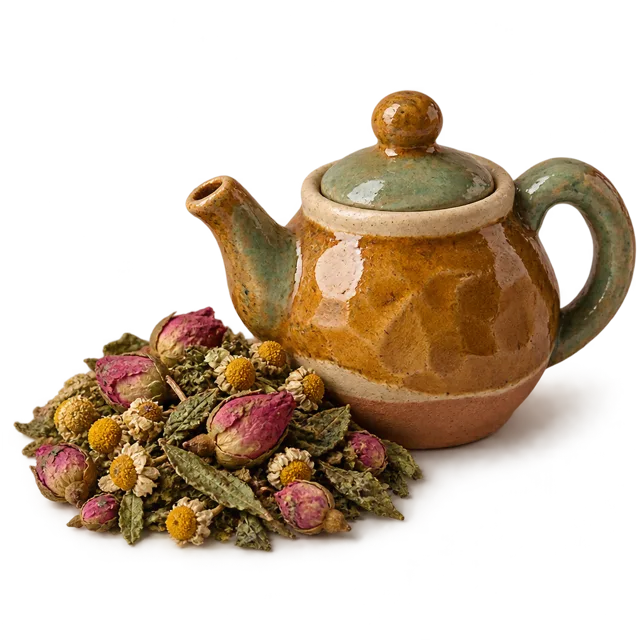
Lebanon and Syria, where dried flower blends are sold loose by spice merchants · Tea · 10 min
Zhourat (زهورات)
Wildflower tea
Traditionally drunk hot in winter when someone has a cold or a tickly cough, and after meals. Cultural practice, not studied: the blend has never been tested as a whole. The researchers noted that its traditional uses fit the folk uses of its ingredients, but that isn't evidence it works. A hot drink with rest fits NHS self-care advice for a cold.
Where it comes from
Zhourat means 'flowers' in Arabic, and the tea is a mix of whatever dried blossoms, herbs and fruits a family or spice seller favours. An ethnobotany study of zhourat blends found damask rose, a local mallow, chamomile, lemon verbena, corn silk and oleaster at their heart, and people described it as warming and good for chests and digestion.
You'll need
- a zhourat blend that lists every ingredient on the label (often dried rose buds, chamomile, lemon verbena, mallow and corn silk)1 tbsp
- just-boiled watera cup (about 250 ml)
- sugar (optional)to taste
How it's made
- 1Put the flower blend in a teapot and pour over just-boiled water.
- 2Cover and leave for 5 to 10 minutes.
- 3Strain, sweeten lightly if you like, and let it cool until comfortably warm before sipping.
- 4Adults only. Blends vary, so we don't suggest a daily amount; avoid unlabelled blends.
What the evidence says
Cultural practice, not studied: the blend has never been tested as a whole. The researchers noted that its traditional uses fit the folk uses of its ingredients, but that isn't evidence it works. A hot drink with rest fits NHS self-care advice for a cold.
A real tradition we can document, but nobody has properly tested it.
Who should skip it
- 🤰 Avoid in pregnancy
- 🧒 For adults only (under 18s should skip it)
- 💊 Only use a blend that lists all its ingredients, and avoid it if it contains herbs you've been told not to take
- 💊 Chamomile, common in these blends, has been reported to interact with warfarin and some medicines processed by the liver, and might add to sedatives: ask your doctor or pharmacist first if you take regular medicines (NCCIH)
- 💊 Avoid medicinal herbal blends like this in pregnancy and while breastfeeding; little is known about chamomile's safety then (NCCIH)
- 🌼 Daisy-family allergy (chamomile is a common ingredient)
- 🌼 Pollen allergy
- Cold symptoms that get worse, or don't improve after 10 days
- A high temperature for more than 3 days, a very high temperature, or you feel hot, cold or shivery
- A cough that lasts more than 3 weeks
- You have a long-term condition or a weakened immune system
- Call 999 (UK) or 911 (US) if you have sudden chest pain, severe difficulty breathing (gasping, choking or unable to get words out), are coughing up blood, or become confused or very hard to wake
Sources
- Beverage and culture. 'Zhourat', a multivariate analysis of the globalization of a herbal tea from the Middle East (Appetite, 2014) (PubMed)
- Common cold (NHS)
- Cough (NHS)
- Chamomile (NCCIH)
By the Remedies by Culture editorial team · Last checked 2 October 2026 · Not medical advice, and not medically reviewed.


