The argan forests of southwest Morocco, around Essaouira and Agadir · On the skin · 5 min
Zit argan (زيت أركان)
Argan oil for dry skin and nails
Traditionally used to soften dry skin, nails and hair, and as a cooking oil. Argan oil has been studied, but the evidence is thin. One small trial in postmenopausal women found that using it on the skin, or eating it, improved skin elasticity. A review of plant oils describes possible skin barrier benefits, but mostly from lab work. There are no studies of it on nails.
Where it comes from
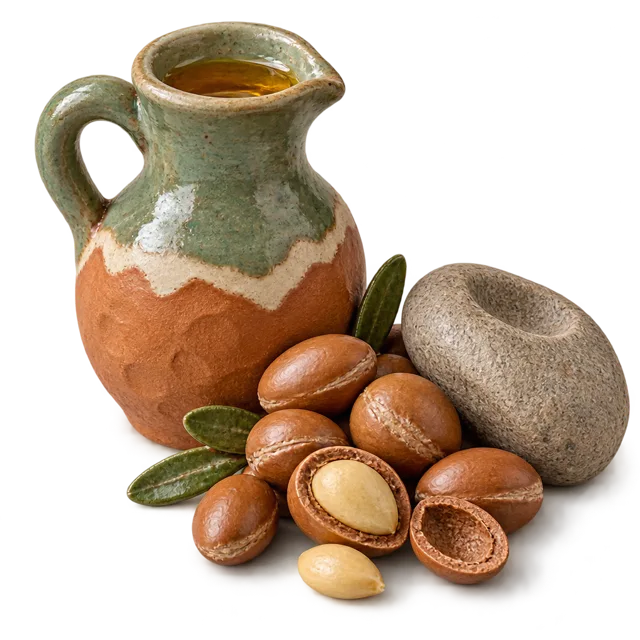
Argan trees grow almost nowhere else but southwest Morocco. Amazigh women have long cracked the nuts by hand, and many women's cooperatives still make the oil the traditional way. It's drizzled on couscous, dipped with bread, and rubbed into hands and hair.
You'll need
- pure cosmetic argan oil (cold-pressed, unroasted)2 to 3 drops
How it's made
- 1Patch test on your inner arm 24 hours before first use; dermatologists suggest testing for a week if it's something you'll use every day.
- 2Skin: warm 2 or 3 drops in your palms and press onto damp skin after washing, focusing on dry patches.
- 3Nails: massage a drop into each cuticle and nail at bedtime.
- 4Use the unroasted cosmetic oil on skin; the roasted culinary oil smells nutty and is for eating.
What the evidence says
Argan oil has been studied, but the evidence is thin. One small trial in postmenopausal women found that using it on the skin, or eating it, improved skin elasticity. A review of plant oils describes possible skin barrier benefits, but mostly from lab work. There are no studies of it on nails.
A real tradition we can document, but nobody has properly tested it.
Who should skip it
- 🤰 Fine in normal food amounts in pregnancy
- 🧒 Not for children under 12
- 💊 Choose pure argan oil without added fragrance
- 🌼 Tree-nut allergy: argan is a nut oil, so take care and patch test
- A rash that spreads, blisters or keeps itching after you stop using it
- Signs of infection: skin that's hot, swollen, painful or oozing
- A mole or dark patch that is new, changing shape or colour, bleeding or itchy
- Nails that change colour, lift, thicken or crumble
Sources
- Argan oil (Wikipedia)
- The effect of dietary and/or cosmetic argan oil on postmenopausal skin elasticity (PubMed)
- Anti-Inflammatory and Skin Barrier Repair Effects of Topical Application of Some Plant Oils (PubMed)
- Dermatologists' top tips for relieving dry skin (American Academy of Dermatology)
By the Remedies by Culture editorial team · Last checked 30 September 2026 · Not medical advice, and not medically reviewed.