
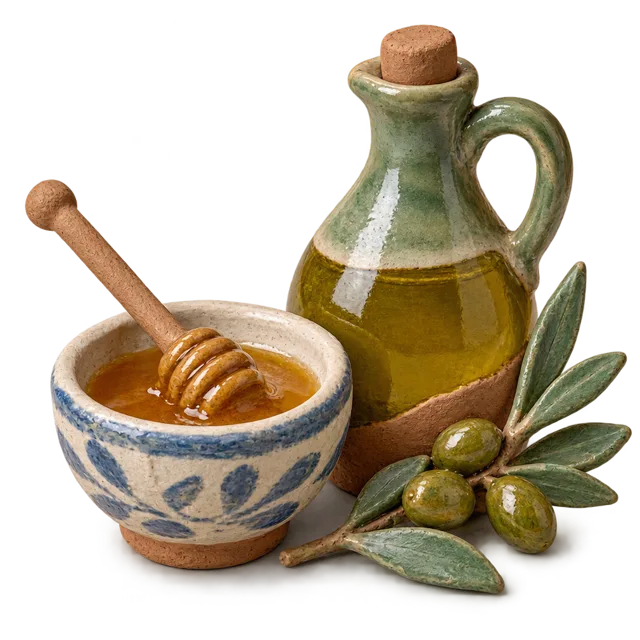
Home kitchens across Greece and the islands · On the skin · 15 min
Máska me eláiolado kai méli (Μάσκα με ελαιόλαδο και μέλι)
Olive oil and honey face mask
Traditionally used as a simple mask to leave skin feeling soft and supple. Cultural practice, not studied as a mask. A small study found olive oil applied daily for four weeks actually weakened the skin barrier, so it isn't a good everyday moisturiser, especially for eczema-prone skin. As an occasional wash-off mask, the honey mainly adds a soft, sticky feel.
Where it comes from
Greeks have rubbed olive oil into their skin since ancient times; athletes rubbed themselves with oil while exercising in the gymnasium. Honey and olive oil, the two most Greek of pantry staples, still come together in homemade face masks today.
You'll need
- runny honey1 tbsp
- extra-virgin olive oil1 tsp
How it's made
- 1Patch test on your inner arm 24 hours before first use; dermatologists suggest testing for a week if it's something you'll use every day.
- 2Stir the honey and olive oil together in a small bowl.
- 3Spread a thin layer over clean, dry skin, avoiding the eyes.
- 4Relax for 10 minutes, then rinse off with warm water and a soft cloth. Pat dry.
- 5Once a week is plenty; skip it if you have eczema-prone skin.
What the evidence says
Cultural practice, not studied as a mask. A small study found olive oil applied daily for four weeks actually weakened the skin barrier, so it isn't a good everyday moisturiser, especially for eczema-prone skin. As an occasional wash-off mask, the honey mainly adds a soft, sticky feel.
A real tradition we can document, but nobody has properly tested it.
Who should skip it
- 🤰 Fine in normal food amounts in pregnancy
- 🧒 Never give honey to babies under 1
- 💊 Not for children's faces; and never give honey to babies under 1
- 💊 Don't leave olive oil on the skin every day, especially if you have eczema
- 🌼 Pollen or bee-product allergy (honey)
- 🌼 Olive allergy
- A rash that spreads, blisters or keeps itching after you stop using it
- Signs of infection: skin that's hot, swollen, painful or oozing
- A mole or dark patch that is new, changing shape or colour, bleeding or itchy
Sources
- Olive oil (Wikipedia)
- Effect of olive and sunflower seed oil on the adult skin barrier: implications for neonatal skin care (PubMed)
- How to test skin care products (American Academy of Dermatology)
By the Remedies by Culture editorial team · Last checked 30 September 2026 · Not medical advice, and not medically reviewed.


