Brazilian homes, where the grounds from the day's coffee are often reused around the house · Home hack · 10 min
Borra de café na geladeira
Dried coffee grounds to freshen the fridge
Traditionally used to soak up stale smells in the fridge and freezer, and to give the used grounds from the daily coffee a second life. A household habit, not tested in studies: that dry grounds soak up smells is an unverified custom, and their own coffee smell may simply cover others. They don't clean or disinfect anything, so cleaning the fridge comes first. The FDA advises cleaning the fridge regularly and wiping up spills straight away to reduce the growth of Listeria bacteria, and warns that you can't judge whether food is safe by its smell, so a fresher-smelling fridge isn't the same as a clean or safe one.
Where it comes from
In many Brazilian households the leftover grounds from the day's coffee (borra de café) get a second life around the home. A bowl of coffee grounds in the fridge is a well-known Brazilian tip for stale smells, shared by national outlets such as Globo's TechTudo.
You'll need
- used coffee grounds3 to 4 tbsp
- a plate or tray for drying1
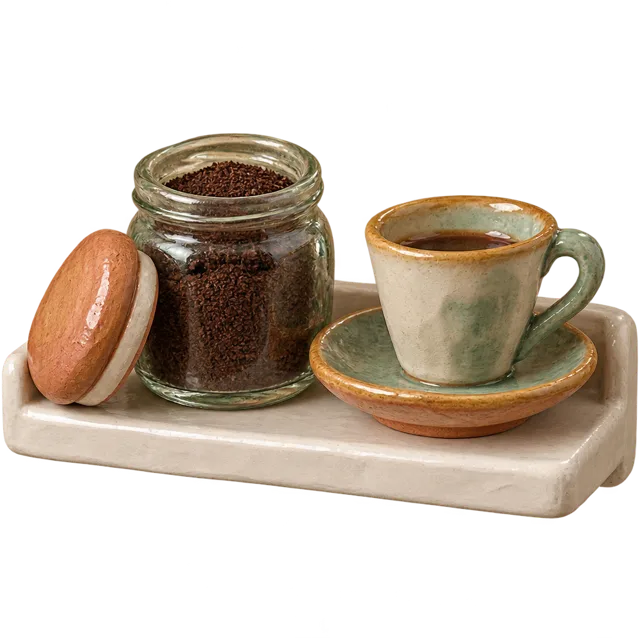
- a small open jar or bowl1
How it's made
- 1Clean the fridge first, because a jar of coffee doesn't remove the source of a smell: throw out anything spoiled, wipe up spills, and wash the shelves and drawers with warm soapy water, then rinse and dry.
- 2Spread the used grounds thinly on a plate and leave them in a warm, airy place until completely dry, usually a day or two. Damp grounds go mouldy in the fridge.
- 3Put the dry grounds in a small open jar or bowl at the back of a shelf, away from uncovered food.
- 4Change them every week or so (our suggestion, not a tested rule), and throw them out straight away if they look damp or mouldy. Tip old grounds into the compost or the bin and wash the jar.
- 5Keep the jar where dogs, cats and small children can't reach it.
What the evidence says
A household habit, not tested in studies: that dry grounds soak up smells is an unverified custom, and their own coffee smell may simply cover others. They don't clean or disinfect anything, so cleaning the fridge comes first. The FDA advises cleaning the fridge regularly and wiping up spills straight away to reduce the growth of Listeria bacteria, and warns that you can't judge whether food is safe by its smell, so a fresher-smelling fridge isn't the same as a clean or safe one.
A real tradition we can document, but nobody has properly tested it.
Who should skip it
- 🤰 Fine in normal food amounts in pregnancy
- 🧒 For adults only (under 18s should skip it)
- 💊 It doesn't clean or disinfect: keep cleaning the fridge regularly and throw out spoiled food
- 💊 Don't mix cleaning products while you clean the fridge, and never mix bleach with vinegar or ammonia
- ⚠️ Dry the grounds completely first; damp grounds go mouldy
- ⚠️ Replace them regularly (households often do so every week or so), and throw them out at once if you see mould
- ⚠️ Coffee is toxic to dogs and cats (ASPCA): keep the jar, and the bin, out of their reach, and away from small children
- ⚠️ It only deals with smell: it doesn't clean, disinfect or make food safer
- ⚠️ Never mix cleaning products, and never mix bleach with vinegar or ammonia
- If a dog or cat eats coffee grounds, call your vet or an animal poison line straight away: the ASPCA says caffeine can cause vomiting, diarrhoea, hyperactivity, an abnormal heart rhythm, tremors and seizures in pets
- If a small child eats a mouthful of grounds, call US Poison Control (1-800-222-1222) or NHS 111 (UK) for advice
Sources
- Como tirar cheiro ruim da geladeira? Saiba o que é bom usar e como evitar (TechTudo (Globo, Brazil))
- Are You Storing Food Safely? (US Food and Drug Administration)
- People Foods to Avoid Feeding Your Pets (ASPCA Animal Poison Control)
- First aid for poisonings (Poison Control (US))
By the Remedies by Culture editorial team · Last checked 2 October 2026 · Not medical advice, and not medically reviewed.