
A thrifty household habit in Japanese homes (mottainai, 'don't waste') · Home hack · 5 min
Togi-jiru (研ぎ汁)
Rice-rinse water for cleaning and plants
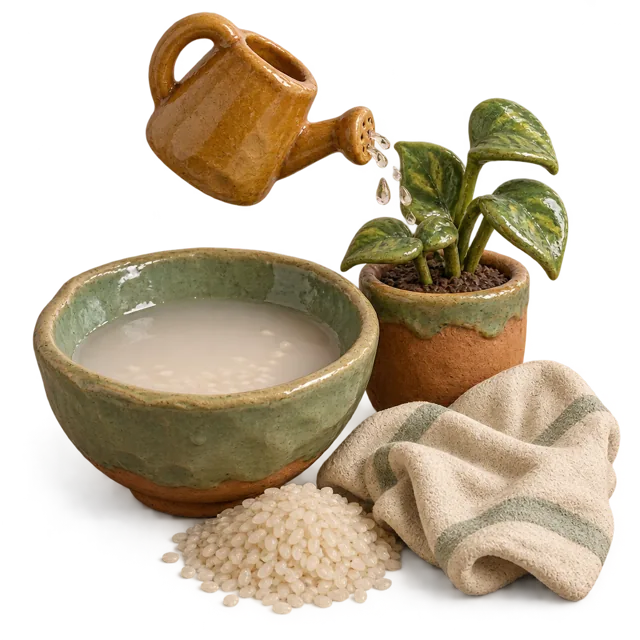
Traditionally used to wipe wooden floors and give them a soft sheen, and poured on plants instead of down the sink. This is a household habit, not something that's been tested. It's a gentle, low-risk way to reuse water; don't expect it to disinfect anything.
Where it comes from
In Japanese homes, the cloudy water from rinsing rice (togi-jiru) was traditionally reused rather than thrown away, in the spirit of mottainai. It's also well known for its long history as a hair rinse.
You'll need
- water from the first or second rinse of uncooked rice1 bowl
- soft cloth1
How it's made
- 1When you rinse rice before cooking, save the cloudy water from the first or second rinse.
- 2Dampen a soft cloth with it, wring well, and wipe sealed wooden floors or furniture; buff dry with a clean cloth.
- 3Or let it cool and use a small amount to water houseplants.
- 4Use it the same day; don't store it.
What the evidence says
This is a household habit, not something that's been tested. It's a gentle, low-risk way to reuse water; don't expect it to disinfect anything.
A real tradition we can document, but nobody has properly tested it.
Who should skip it
- 🤰 Fine in normal food amounts in pregnancy
- 🧒 Fine for children in normal food amounts
- ⚠️ Starchy water goes sour and smelly within a day; use it fresh
- ⚠️ Spot-test first on waxed, oiled or unsealed wood
- ⚠️ Water plants with it only occasionally and in small amounts; left standing, it can encourage mould on the soil
- ⚠️ It cleans lightly but does not disinfect
Sources
- Rice water (Wikipedia)
By the Remedies by Culture editorial team · Last checked 30 September 2026 · Not medical advice, and not medically reviewed.


