Chad, among Basara Arab women, who coat it onto braided hair · On the skin · 0 min
Chébé
Chebe powder hair coating
Traditionally coated onto the lengths of braided hair to keep them soft and less prone to snapping. Cultural practice, not studied: there are no published trials of chebe, so there's no evidence that it reduces breakage or makes hair grow. Dermatologists' general advice on limiting breakage, such as conditioning and handling hair gently, is separate from chebe and doesn't show that chebe works.
Where it comes from
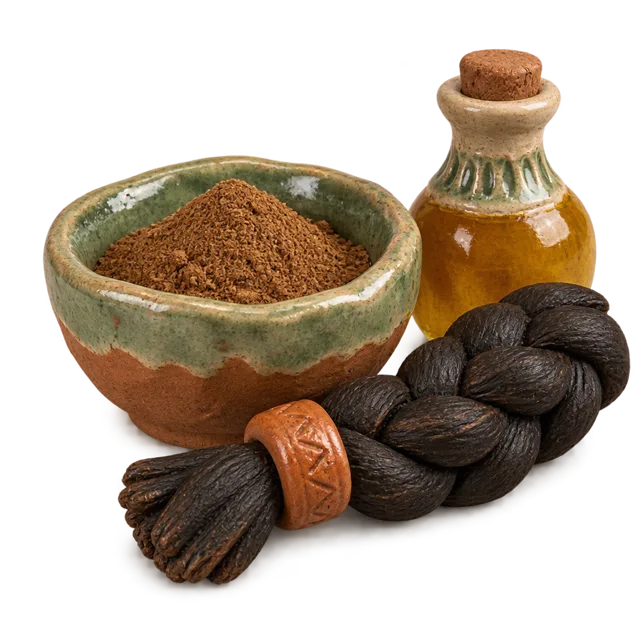
Chébé is a hair-care powder used by rural Basara Arab women in Chad. It is made from ground herbs and other natural ingredients, some of them from plants that grow only in the region. The powder is roasted, mixed with hair oil or animal fat and coated onto braided hair to keep it moisturised and protected.
You'll need
- chebe powder (roasted, ground herbs and other plant ingredients, mixed with oil or fat)as used traditionally
How it's made
- 1We don't give a recipe for chebe. The plants in the blend vary, the main seed's botanical identity is disputed, and its safety on skin and scalp hasn't been studied.
- 2What people do: mix the powder with hair oil or animal fat and coat it onto the lengths of braided hair, several times a month.
- 3We don't give advice on using chebe products: what's in them and whether they're safe on skin and scalp haven't been established.
What the evidence says
Cultural practice, not studied: there are no published trials of chebe, so there's no evidence that it reduces breakage or makes hair grow. Dermatologists' general advice on limiting breakage, such as conditioning and handling hair gently, is separate from chebe and doesn't show that chebe works.
A real tradition we can document, but nobody has properly tested it.
Who should skip it
- 🤰 Pregnant or breastfeeding? Check with your midwife or doctor first
- 🧒 For adults only (under 18s should skip it)
- 💊 Its safety on the skin and scalp, and in pregnancy or breastfeeding, hasn't been studied
- 🌼 Blends vary: avoid unlabelled blends, and don't use one if you're allergic to any listed ingredient
- 🌼 A home patch test can't rule out an allergy; if you have plant, spice or nut allergies, ask a doctor or pharmacist first
- Hair falling out in patches, or a lot more hair coming out than usual
- A sore, scaly, itchy or weeping scalp that doesn't settle
- Hair loss along with feeling tired, weight changes or other new symptoms
Sources
- Tips for healthy hair (American Academy of Dermatology)
- Contact dermatitis (NHS)
- Hair loss (NHS)
- Women in Chad (Chebe) (Wikipedia)
- How to test skin care products (American Academy of Dermatology)
By the Remedies by Culture editorial team · Last checked 2 October 2026 · Not medical advice, and not medically reviewed.