South-west Nigeria (Yoruba) and Ghana, where it is made from plantain-skin or cocoa-pod ash and palm or shea oils · On the skin · 5 min
Ọṣẹ dúdú
African black soap
Traditionally used as an everyday wash for skin and hair, and especially for oily or spot-prone skin. Cultural practice, not studied in people. A dermatology review reports lab tests showing traditional black soap can act against some skin bacteria, but lab findings don't show it helps spots or any skin problem, and many popular claims remain anecdotal. It is quite alkaline, which can dry or irritate sensitive skin.
Where it comes from
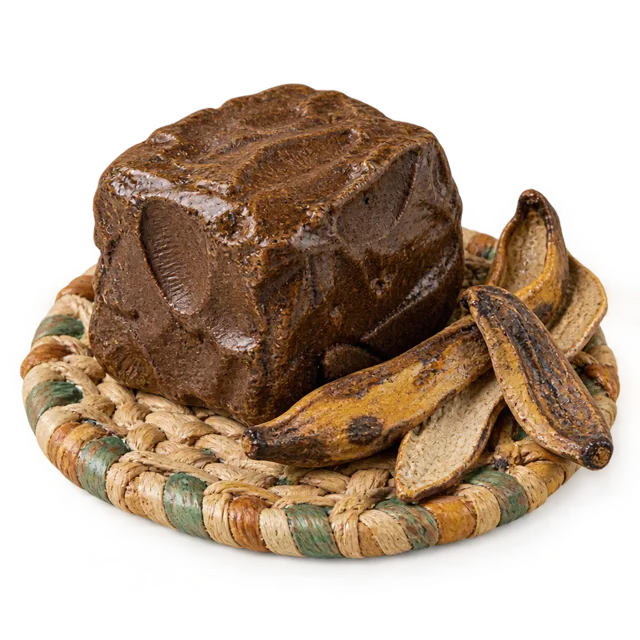
Ọṣẹ dúdú ('black soap' in Yoruba) is hand-made by boiling the ash of plantain skins, cocoa pods or palm leaves with palm kernel oil, coconut oil or shea butter. In Ghana it is called alata samina. It is sold in soft brown lumps in markets across West Africa and is now popular worldwide.
You'll need
- traditional African black soapa small piece
- lukewarm water
How it's made
- 1Patch test first, as dermatologists advise for wash-off products: twice a day for 7 to 10 days, rub a little lather on your inner arm, leave it for 5 minutes, then rinse it off. Don't use it if you get redness, itching or swelling.
- 2Wet your face or skin with lukewarm water.
- 3Rub a small piece of soap between wet hands to make a lather; don't scrub the bar directly on your face, as raw black soap can be gritty.
- 4Massage the lather gently for about 30 seconds, then rinse well and pat dry.
- 5Follow with a plain moisturiser. Start with once a day, or every other day, because it can feel drying.
What the evidence says
Cultural practice, not studied in people. A dermatology review reports lab tests showing traditional black soap can act against some skin bacteria, but lab findings don't show it helps spots or any skin problem, and many popular claims remain anecdotal. It is quite alkaline, which can dry or irritate sensitive skin.
A real tradition we can document, but nobody has properly tested it.
Who should skip it
- 🤰 Fine in normal food amounts in pregnancy
- 🧒 Not for children under 12
- 💊 Can be drying or stinging, especially alongside retinoids or acne washes
- 🌼 Ingredients vary (some soaps contain shea butter, palm kernel oil or coconut oil): read the label and don't use it if you're allergic to any ingredient
- 🌼 A home patch test can't rule out an allergy; if you have a known skin or nut allergy, ask a doctor or pharmacist first
- A rash that spreads, blisters or keeps itching after you stop using it
- Signs of infection: skin that's hot, swollen, painful or oozing
- A mole or dark patch that is new, changing shape or colour, bleeding or itchy
- Spots that are painful, scarring or getting you down
Sources
- African black soap: Physiochemical, phytochemical properties, and uses (Dermatol Ther, 2021) (PubMed)
- African black soap (Wikipedia)
- Face washing 101 (American Academy of Dermatology)
- Contact dermatitis (NHS)
- How to test skin care products (American Academy of Dermatology)
By the Remedies by Culture editorial team · Last checked 2 October 2026 · Not medical advice, and not medically reviewed.