
Kitchen traditions · Japan
Traditional Japanese medicine at home: remedies rated
Traditional Japanese medicine includes Kampo, a herbal system used within Japan's national health insurance. At home, care is simpler: okayu (rice porridge) with umeboshi when someone is ill, a yuzu bath on the winter solstice, seven-herb porridge in January, walks in the forest. We rate each honestly; most are cultural practice.
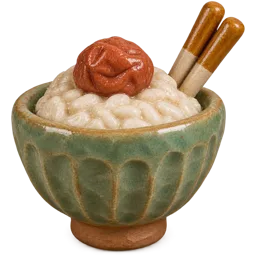
When someone in a Japanese home is feeling unwell, the usual answer is a bowl of okayu: rice simmered in plenty of water until soft, topped with a sour umeboshi plum and a little sliced spring onion. It is gentle, plain and quick to make, and many people grew up eating it on sick days.
Seasonal habits matter as much as recipes. On the winter solstice, whole yuzu fruits float in the bath; on 7 January, families eat nanakusa-gayu, porridge with seven spring greens, after the rich New Year food. Washoku, Japan's traditional food culture, is listed by UNESCO for its respect for seasonal ingredients.
Japan also has Kampo, a system of herbal medicine adapted from Chinese medicine and prescribed by doctors. That is clinical medicine, and we don't cover it. Here we rate the home and kitchen traditions honestly.
Traditions to know
Rice porridge for sick days
お粥 (okayu)
Soft, watery rice porridge is regarded in Japan as suitable for anyone who is ill or elderly, and okayu with umeboshi is the standard folk remedy for colds.
Yuzu bath on the winter solstice
柚子湯 (yuzu-yu)
On Tōji, the winter solstice, people float whole yuzu in a hot bath, a custom dating to at least the early 18th century. It is said to ward off colds and warm the body; that belief is traditional, but the citrus scent and warm soak are a pleasure in themselves.
Seven-herb porridge in January
七草粥 (nanakusa-gayu)
On 7 January, families eat rice porridge with seven young spring herbs, a light meal after New Year feasting and a wish for good health in the year ahead.
Forest bathing
森林浴 (shinrin-yoku)
Slow, mindful walks among trees, a practice named and promoted in Japan in the 1980s. A 2019 review found lower cortisol, a stress marker, after time in forests, though studies were small and placebo effects may play a part.
Remedies from Japan
Okayu with umeboshi and negi
Soft rice porridge with pickled plum and green onion
Cultural practice
Shinrin-yoku (森林浴)
Forest bathing
Cultural practice
Togi-jiru (研ぎ汁)
Rice-rinse water for cleaning and plants
Cultural practice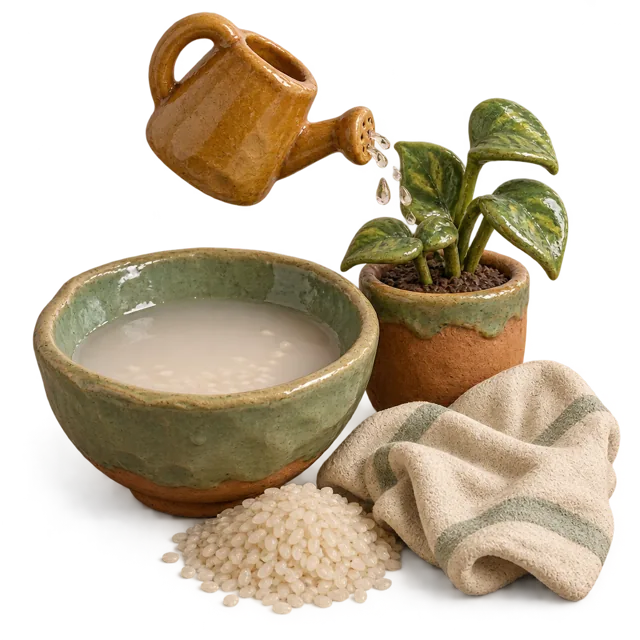
Tsubaki abura (椿油)
Camellia oil for hair and skin
Cultural practice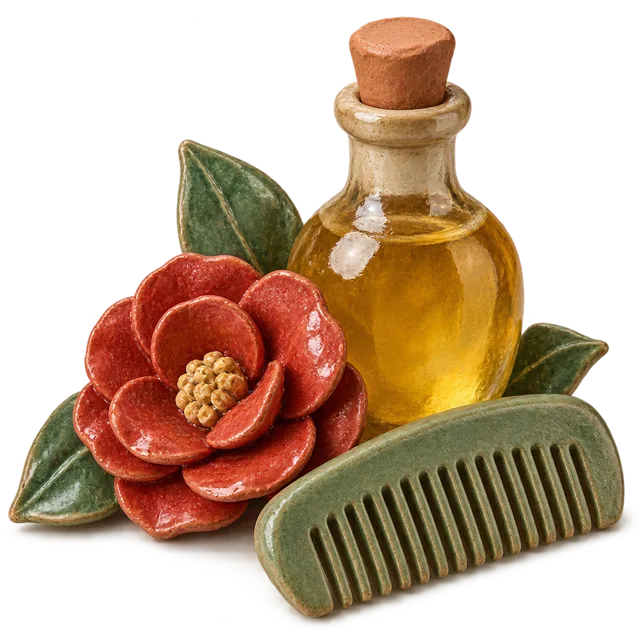
Kairo (カイロ)
Disposable heat pad
Cultural practice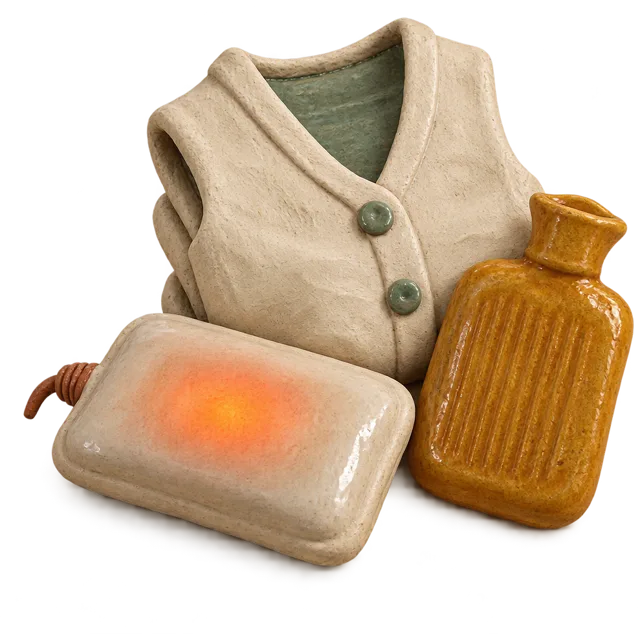
Kuzuyu (葛湯)
Warm kudzu starch drink
Cultural practice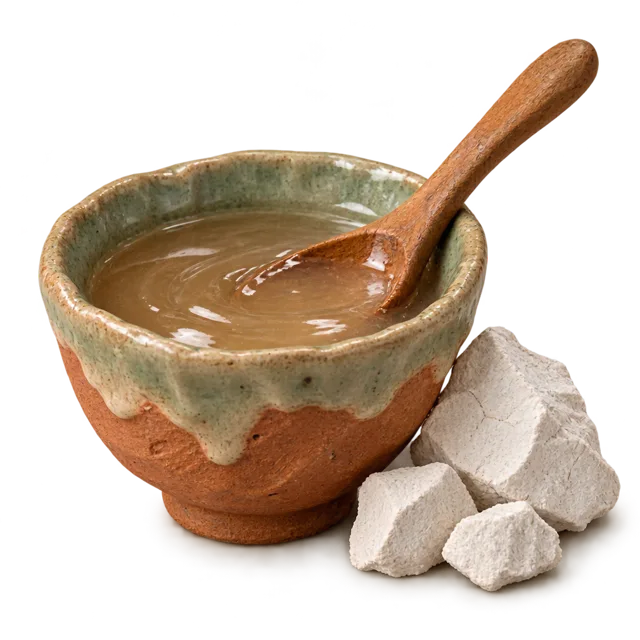
Komekami ni umeboshi (こめかみに梅干し)
Umeboshi on the temples
Cultural practice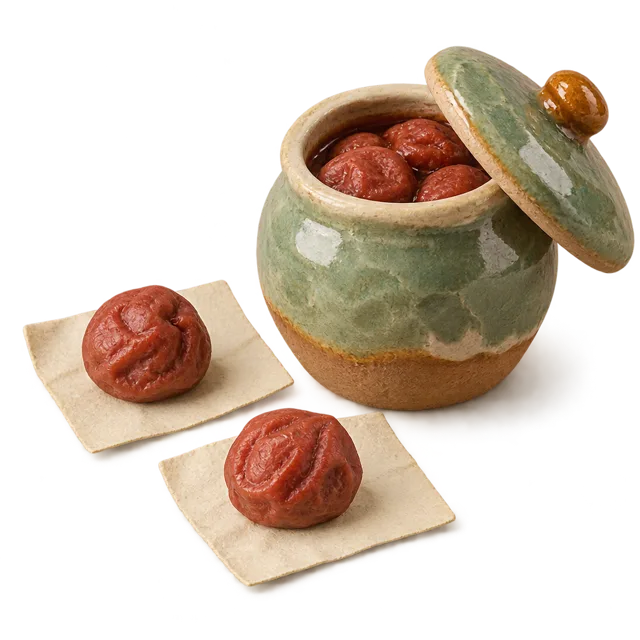
Nukabukuro (糠袋)
Rice-bran wash bag
Cultural practice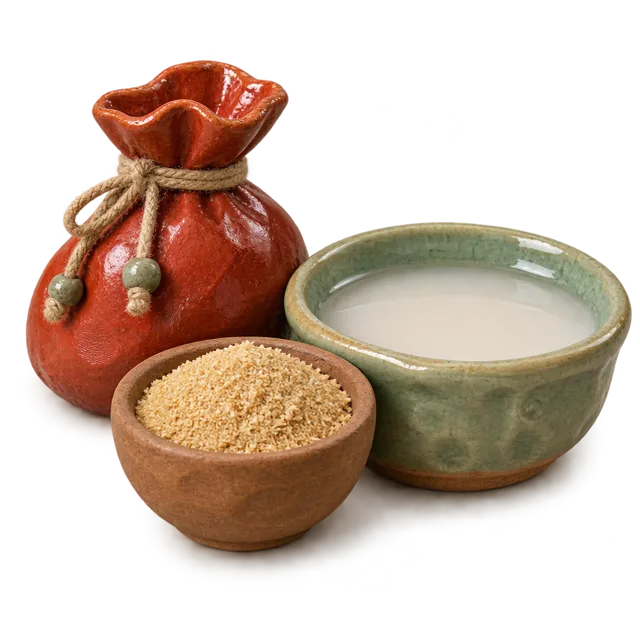
Mushi-taoru (蒸しタオル)
Warm steamed towel over tired eyes
Cultural practice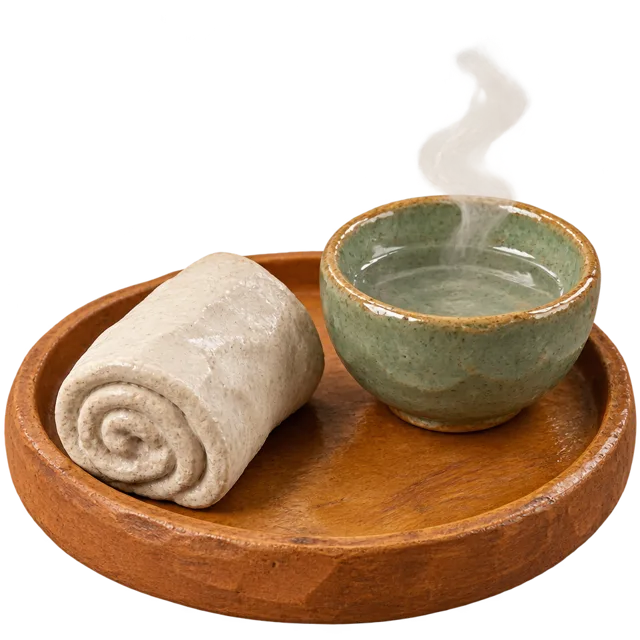
Ingredients in Japanese kitchens
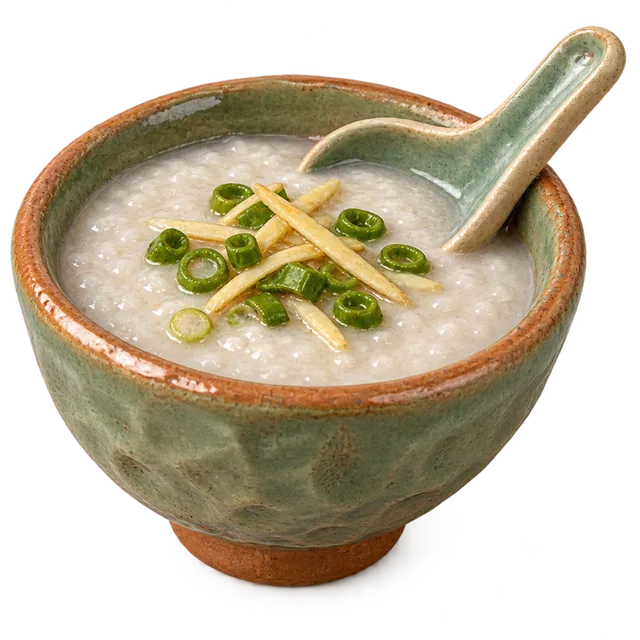 Congee
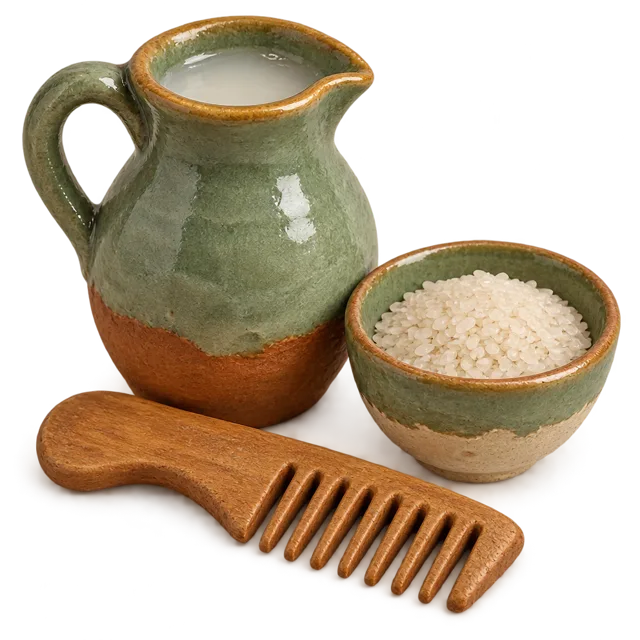 Rice water
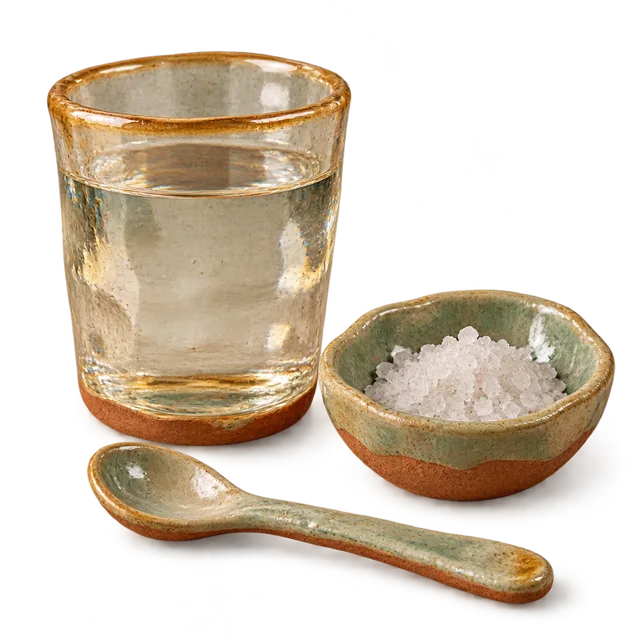 Salt-water gargle
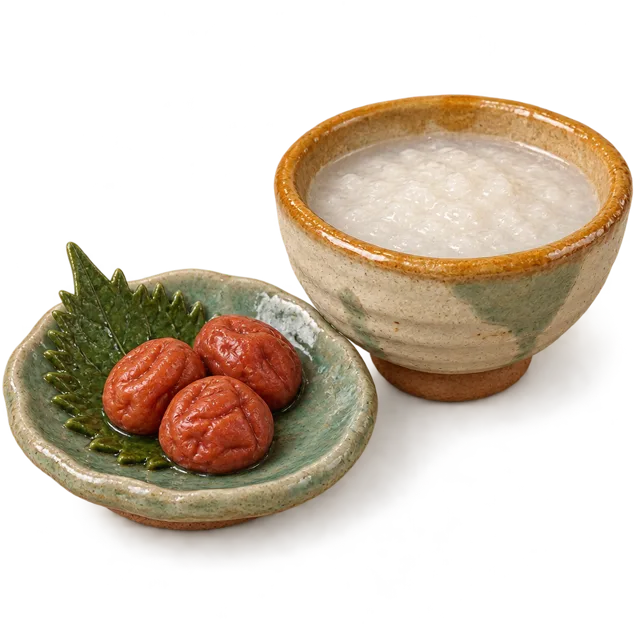 Umeboshi
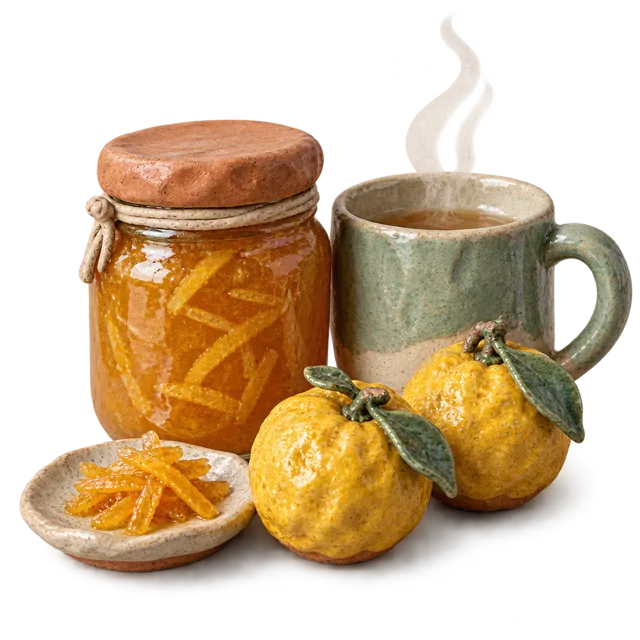 Yuja tea
Questions people ask
What is traditional Japanese medicine (Kampo)?
Kampo is Japan's traditional herbal medicine, adapted from Chinese medicine over centuries. Today Kampo formulas are prescribed by doctors and covered by national health insurance. It is a clinical system; our pages cover only home and kitchen traditions.
What do Japanese people eat when they are sick?
Okayu, soft rice porridge, often with umeboshi and spring onion, is the classic. Udon in a light broth is another favourite. These are gentle comfort foods; there is little research on them for illness.
Are Japanese remedies like yuzu baths backed by science?
Mostly no: the yuzu bath and okayu are cultural practice rather than studied remedies. Forest bathing has the most research, mainly small studies on stress. Kampo herbal formulas are a separate topic and can interact with medicines.
Sources
- Kampo (Wikipedia)
- Umeboshi (Wikipedia)
- Yuzu (Yuzu baths) (Wikipedia)
- Washoku, traditional dietary cultures of the Japanese, notably for the celebration of New Year (UNESCO)
- Effects of forest bathing (shinrin-yoku) on levels of cortisol as a stress biomarker: a systematic review and meta-analysis (Int J Biometeorol, 2019) (PubMed)
By the Remedies by Culture editorial team · Last checked 1 October 2026 · Not medical advice, and not medically reviewed. How we work
The Remedy Atlas · digital book
How the world heals, honestly rated
127 remedies from 64 cultures, in one beautiful book. Each has its recipe, an honest evidence rating and clear safety flags.

