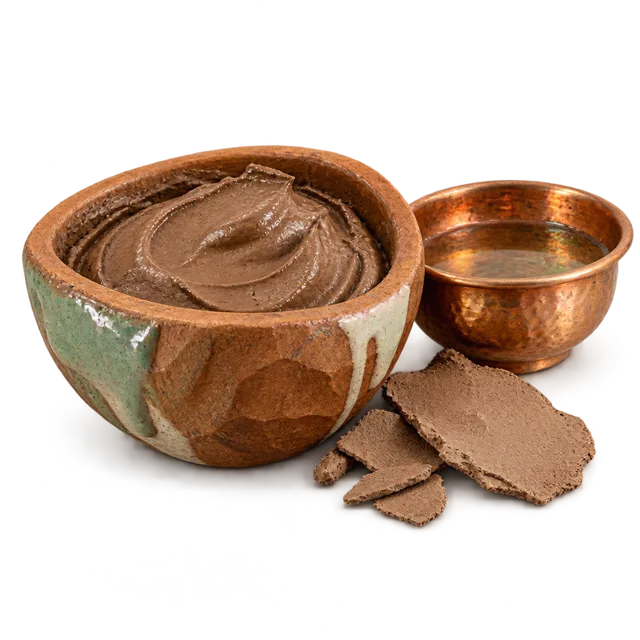
Mined in the Middle Atlas mountains and used in hammams across Morocco · Bath · 20 min
Ghassoul (الغاسول)
Rhassoul clay mask
Traditionally used in the hammam to wash skin and hair and leave them feeling clean and soft. Cultural practice, not studied. There's little formal research on rhassoul. It cleans like a gentle soap substitute; claims that it draws out toxins aren't backed by evidence.
Where it comes from
Rhassoul, from the Arabic word for 'to wash', has been dug from the Atlas mountains for centuries. In the Moroccan hammam it's mixed with water or rose water and spread over skin and hair or applied to the body with a kessa glove.
You'll need
- rhassoul clay, cosmetic grade1 to 2 tbsp
- warm water or rose waterenough to make a paste
- wooden or glass bowl1
How it's made
- 1Patch test on your inner arm 24 hours before first use; dermatologists suggest testing for a week if it's something you'll use every day.
- 2Stir warm water into the clay a little at a time until it's a smooth, yoghurt-like paste. Use a wooden or glass spoon.
- 3Face: spread a thin layer on damp skin, avoiding the eyes, and rinse off after 5 to 10 minutes, before it dries hard.
- 4Hair: thin the paste with more water, work it through wet hair and scalp as a wash, then rinse out very thoroughly.
- 5Follow with a moisturiser or a few drops of oil, as clay can leave skin and hair feeling dry.
What the evidence says
Cultural practice, not studied. There's little formal research on rhassoul. It cleans like a gentle soap substitute; claims that it draws out toxins aren't backed by evidence.
A real tradition we can document, but nobody has properly tested it.
Who should skip it
- 🤰 Pregnant or breastfeeding? Check with your midwife or doctor first
- 🧒 Not for children under 12
- 💊 Never eat or drink clay; buy cosmetic-grade clay from a trusted seller
- 💊 Don't let it dry and crack on the face; that can irritate skin
- 💊 Rinse out of hair fully; clay can build up and clog drains
- 🌼 Sensitive or eczema-prone skin may find clay drying
- A rash that spreads, blisters or keeps itching after you stop using it
- Signs of infection: skin that's hot, swollen, painful or oozing
- A mole or dark patch that is new, changing shape or colour, bleeding or itchy
Sources
- Rhassoul (Wikipedia)
- How to test skin care products (American Academy of Dermatology)
- Contact dermatitis (NHS)
By the Remedies by Culture editorial team · Last checked 30 September 2026 · Not medical advice, and not medically reviewed.