
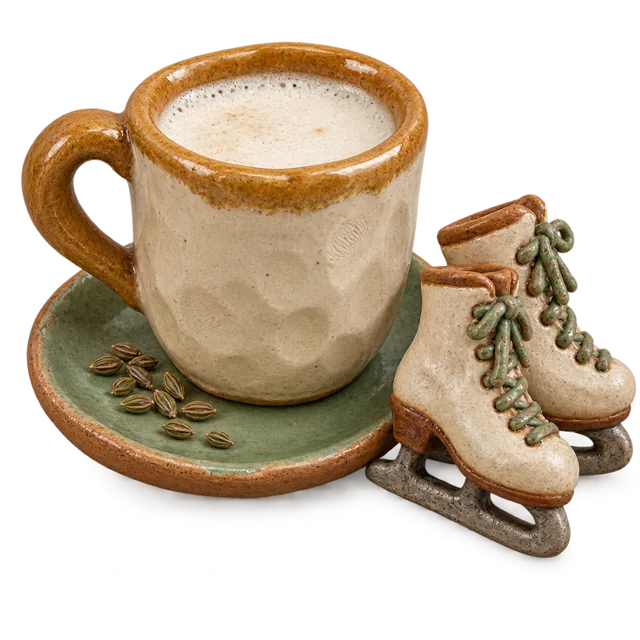
Dutch homes on winter evenings, and stalls beside frozen canals and lakes on skating days · Drink · 10 min
Anijsmelk
Warm aniseed milk
Traditionally drunk warm in the evening to wind down for sleep, and to warm up on cold days. Cultural practice, not studied. No trials have tested aniseed milk for sleep, and there's no good evidence that warm milk itself makes you sleepy. A warm, caffeine-free drink can be part of a regular, relaxing bedtime routine, which the NHS recommends. The EMA's traditional-use aniseed monograph covers bloating and coughs, not sleep.
Where it comes from
Anijsmelk is hot milk flavoured with aniseed and sugar. Dutch families have long made it on winter evenings, and it's sold from stalls on the ice when canals and lakes freeze for skating. For generations people made it with anijsblokjes, aniseed sugar cubes dissolved in hot milk; the cubes are now sold as powder sachets. The drink has a reputation for helping you sleep.
You'll need
- milk, or a plant milk (check its label for allergens)250 ml
- whole aniseed (Pimpinella anisum, not star anise), lightly crushed½ tsp (about 1 g)
- sugar1 tsp
How it's made
- 1Warm the milk with the crushed aniseed over a low heat until it's steaming, without letting it boil. Stir in the sugar.
- 2Take it off the heat, leave it for 5 minutes, then strain out the seeds.
- 3Let it cool until comfortably warm, and sip it slowly as part of a calm bedtime routine.
- 4If you use anijsmelk powder instead of seeds, make it exactly as the packet says.
- 5Adults only as a bedtime drink. In the Netherlands anijsmelk is also an ordinary winter drink, but we don't suggest it, or any amount of aniseed, as a sleep aid for children.
- 6Brush your teeth afterwards, because of the milk sugars.
What the evidence says
Cultural practice, not studied. No trials have tested aniseed milk for sleep, and there's no good evidence that warm milk itself makes you sleepy. A warm, caffeine-free drink can be part of a regular, relaxing bedtime routine, which the NHS recommends. The EMA's traditional-use aniseed monograph covers bloating and coughs, not sleep.
A real tradition we can document, but nobody has properly tested it.
Who should skip it
- 🤰 Pregnant or breastfeeding? Check with your midwife or doctor first
- 🧒 For adults only (under 18s should skip it)
- 💊 Aniseed as a flavouring in food is normal, but the EMA doesn't recommend aniseed as a medicine in pregnancy or while breastfeeding, or for children under 12: in pregnancy or while breastfeeding, have plain warm milk instead
- 💊 Don't drink it as an aniseed remedy for more than 2 weeks (EMA)
- 🌼 Milk allergy. If you use a plant milk, check its label: some are made from nuts, soya or oats
- 🌼 Don't use aniseed if you're allergic to anise, anethole or other plants in the carrot family, such as fennel, caraway, celery, coriander or dill (EMA)
- 🌼 Anijsmelk powder can contain milk powder and other ingredients: read the label
- See a GP if poor sleep lasts for months and affects your day, or you snore loudly with pauses in your breathing
- See a GP if worry or low mood is keeping you awake
Sources
- Anijsmelk (Wikipedia)
- Koek-en-zopie (Wikipedia)
- Anijsblokjes (Culinarius)
- Insomnia (NHS)
- How to get to sleep (NHS)
- Anisi fructus (aniseed) herbal monograph (EMA)
By the Remedies by Culture editorial team · Last checked 2 October 2026 · Not medical advice, and not medically reviewed.


