
Chinese remedies for a cough
In China, a cough is traditionally met with steamed pear with rock sugar, monk fruit tea, steamed orange. Here are 3 home remedies, how they're made, and an honest rating of the evidence for each.
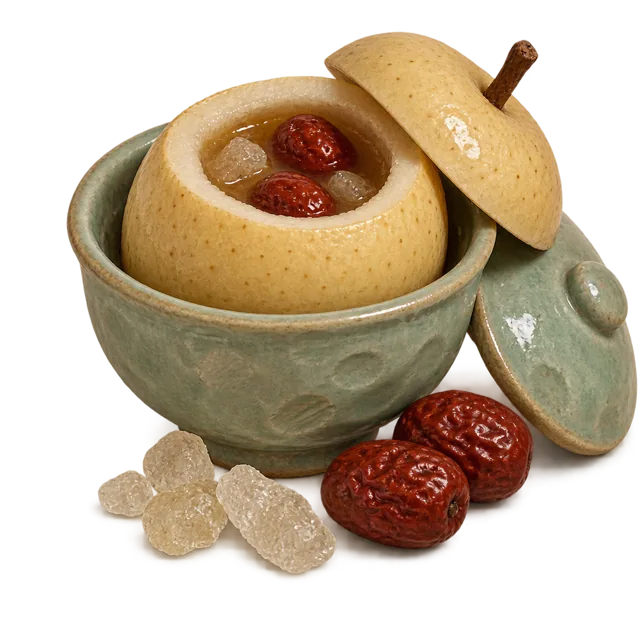
1. Home cooking across China, especially in the dry winter months
Bīngtáng dùn xuělí (冰糖炖雪梨)
Steamed pear with rock sugar
Traditionally eaten to soothe a dry, tickly throat and a dry cough in cold, dry weather.
Cultural practiceSteamed pear hasn't been studied for coughs or sore throats. Warm, soft, sweet food can feel soothing, and the NHS suggests soft foods and warm drinks for a sore throat.Recipe, sources and who should skip it →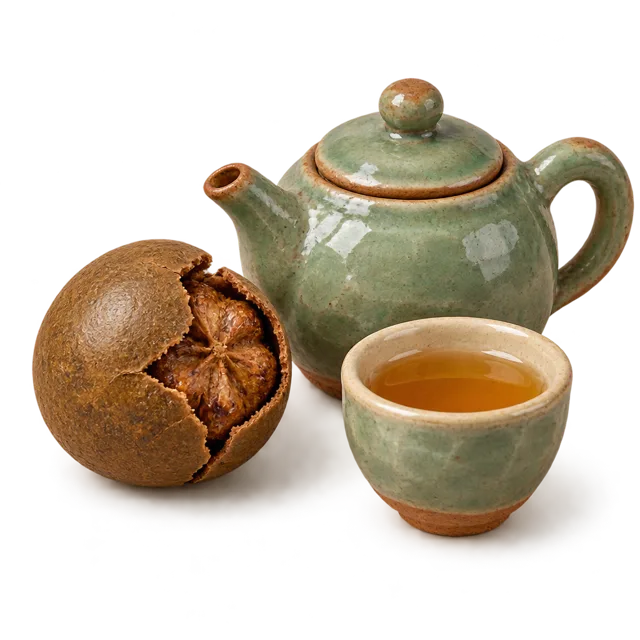
2. Guangxi, where the fruit grows, and kitchens across southern China
Luóhànguǒ chá (罗汉果茶)
Monk fruit tea
Traditionally sipped to soothe a dry, sore throat and a tickly cough.
Cultural practiceLab and animal studies have looked at monk fruit extracts, but there are no good human trials for sore throats or coughs. The tea is warm and naturally sweet without added sugar, and the NHS suggests warm drinks to soothe a sore throat.Recipe, sources and who should skip it →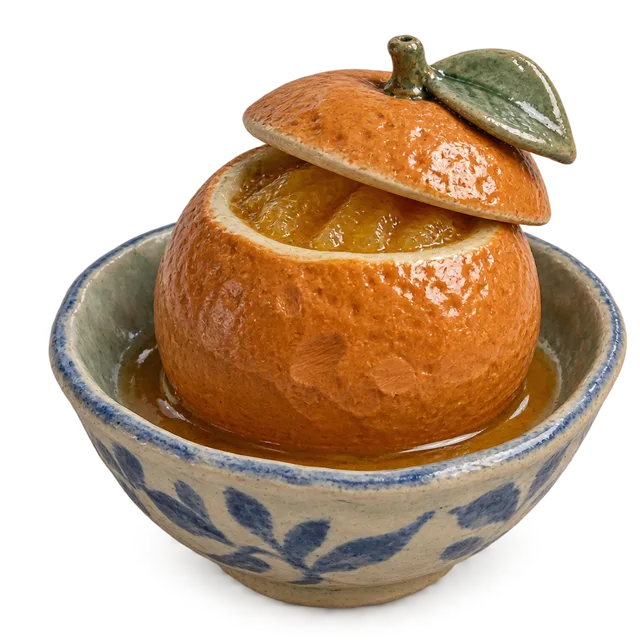
3. Home kitchens across China, and now shared widely online
Yán zhēng chéngzi (盐蒸橙子)
Steamed orange
Traditionally eaten warm to soothe a lingering cough.
Cultural practiceSteamed orange hasn't been studied for coughs. A specialist quoted by People's Daily said the salt adds nothing, too much salt isn't good for a cough, and the orange can only ever be a comfort alongside proper care. Warm, soft fruit is still a pleasant way to get fluids in.Recipe, sources and who should skip it →
More from Chinese kitchens
When to see a doctor: each remedy lists its own warning signs. See also when to see a doctor instead of a home remedy.
The Remedy Atlas · digital book
How the world heals, honestly rated
Every remedy for a cough, and 127 in all from 64 cultures, in one beautiful book. Each has its recipe, an honest evidence rating and clear safety flags.


