Kitchen traditions · China
Chinese remedies: kitchen traditions, honestly rated
Chinese home remedies are mostly everyday cooking: ginger and brown-sugar water on a cold day, a steamed pear for a dry throat, plain rice congee when appetite is low. Many draw on Traditional Chinese Medicine ideas about 'warming' and 'cooling' foods. We rate each one honestly, and most are cultural practice rather than studied.
In many Chinese homes, looking after someone who feels unwell starts at the stove rather than the medicine cabinet. A saying often quoted is that 'medicine and food share a common origin' (药食同源), and that idea shapes what gets cooked when the weather turns or someone is run down: a pot of plain congee, a mug of ginger water, a pear steamed with rock sugar.
Much of this kitchen wisdom borrows language from Traditional Chinese Medicine (TCM), a separate clinical system with its own practitioners. In TCM thinking, foods are described as 'warming' or 'cooling', and families balance them by season: warming ginger in winter, cooling mung bean soup in summer. We describe these as beliefs, not proven effects.
What we rate here are the simple home versions, not herbal formulas. Where a remedy has been studied we say so, and where it is a cherished family habit with no research behind it, we say that too.
Traditions to know
Warming and cooling foods
热性 / 凉性 (rè xìng / liáng xìng)
In Chinese food tradition, ingredients like ginger and lamb are considered 'warming' and pear or mung beans 'cooling'. Cooks use the idea to balance meals by season; it is a belief system, not something studies have confirmed.
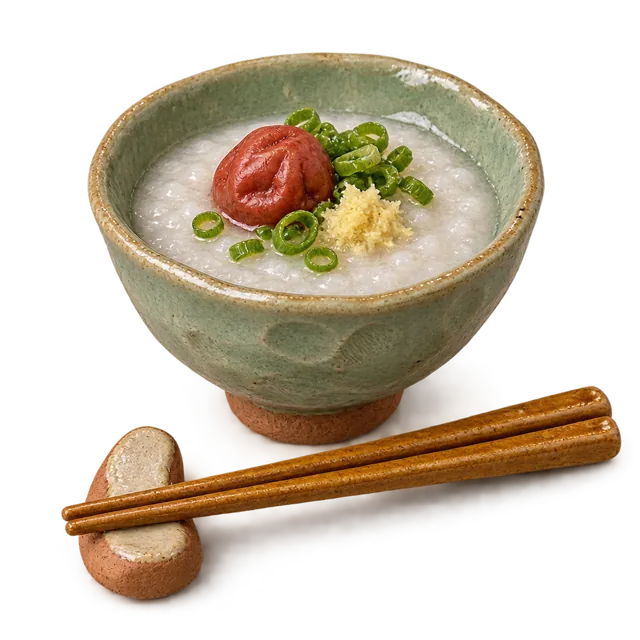
Congee for low days
粥 (zhōu)
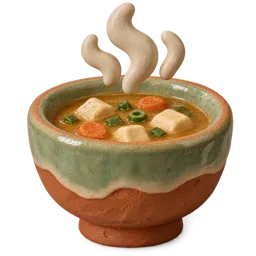
Plain rice porridge is the classic dish for someone with little appetite, because it is soft and easy to eat. Families add a little ginger, spring onion or a salted egg on the side.
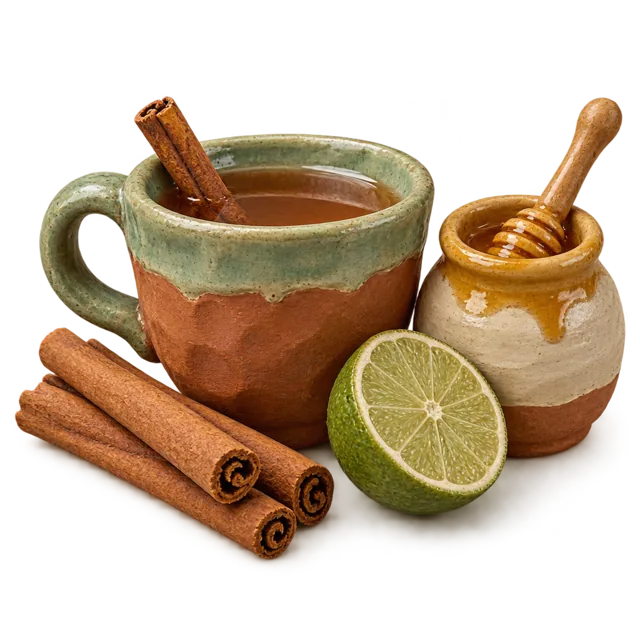
Ginger and brown-sugar water
姜糖水 (jiāng táng shuǐ)
A quick drink of sliced ginger simmered with brown sugar is traditionally made after getting cold and wet, and is a familiar home comfort during periods.
Sweet soups by the season
糖水 (táng shuǐ)
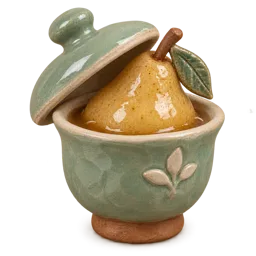
Cantonese households make sweet soups such as steamed pear with rock sugar in dry autumn and winter, traditionally used to soothe a dry, tickly throat.
Chinese remedies by ailment
 Colds
 Sore throat
 Cough
 Flu season
Remedies from China
Bīngtáng dùn xuělí (冰糖炖雪梨)
Steamed pear with rock sugar
Cultural practice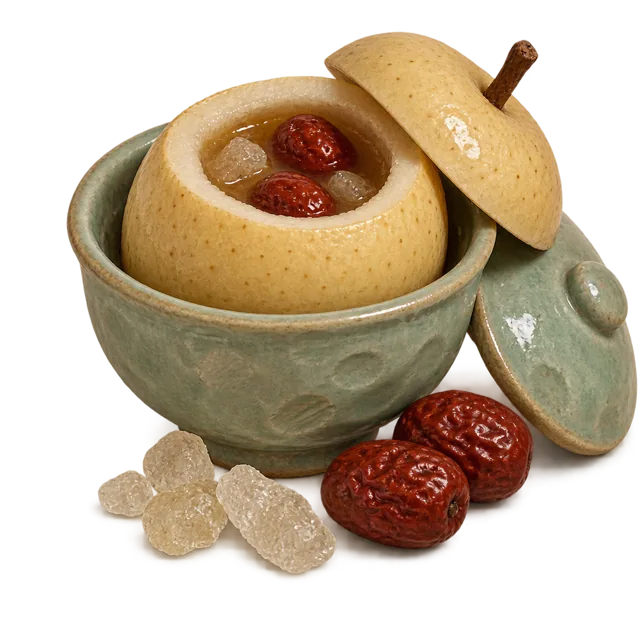
Jiāng táng shuǐ (姜糖水)
Ginger and brown sugar tea
Studied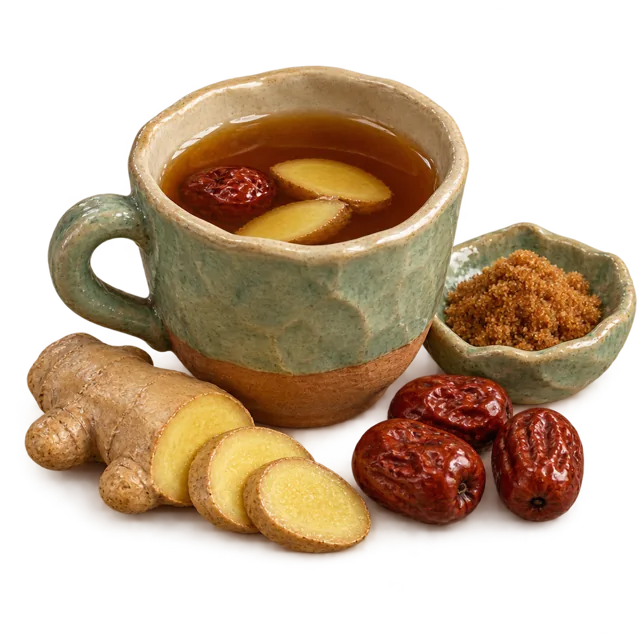
Huangluo Yao rice water rinse (淘米水)
Fermented rice water hair rinse
Cultural practice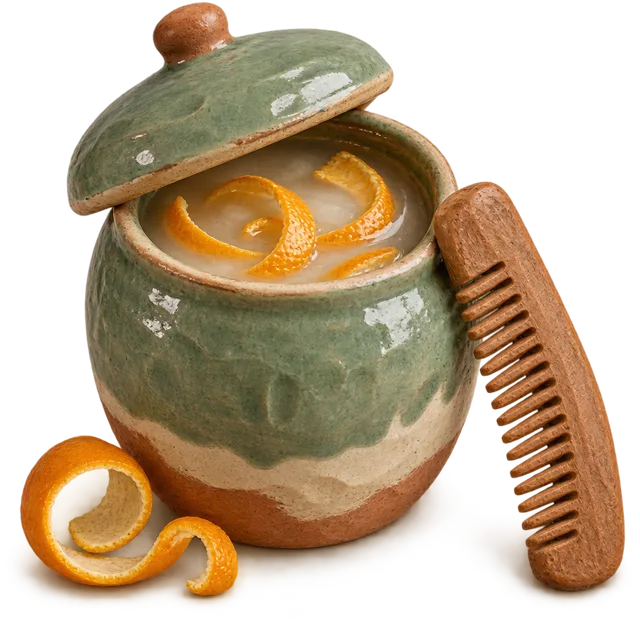
Cōngbái shēngjiāng tāng (葱白生姜汤)
Spring onion and ginger tea
Cultural practice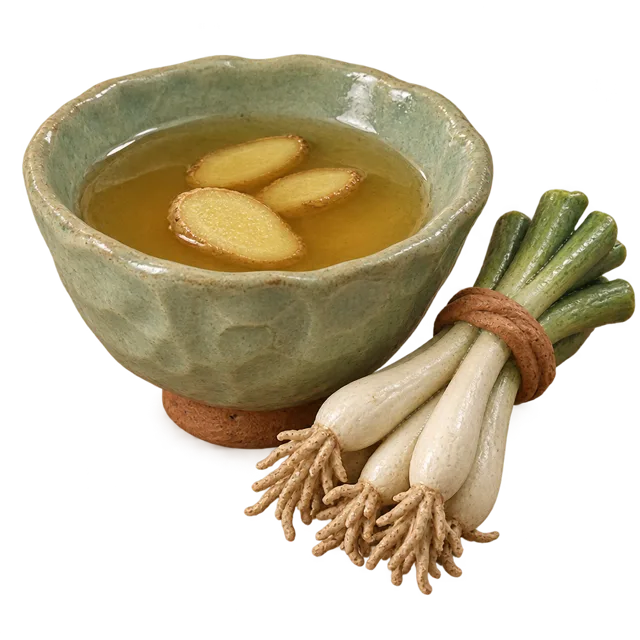
Níngméng kělè bāo jiāng (檸檬可樂煲薑)
Hot cola with ginger and lemon
Cultural practice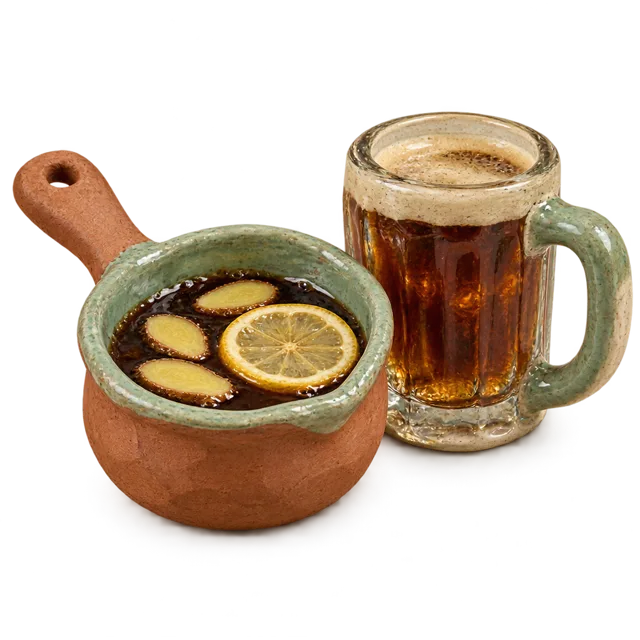
Luóhànguǒ chá (罗汉果茶)
Monk fruit tea
Cultural practice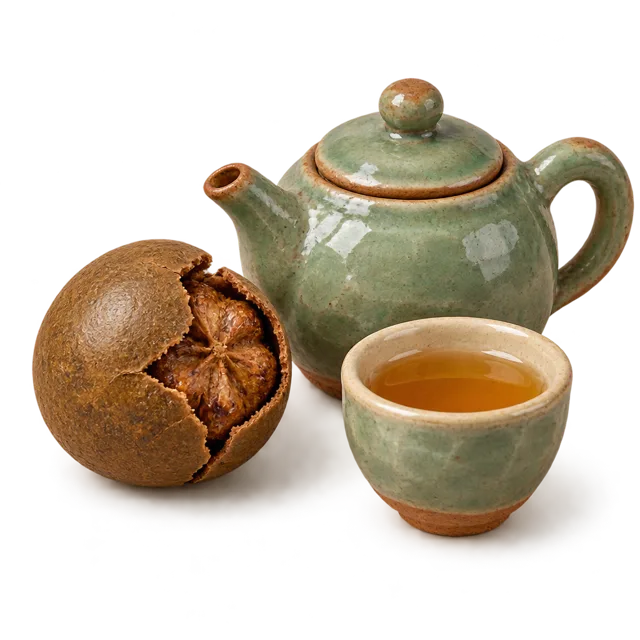
Júhuā chá (菊花茶)
Chrysanthemum tea
Cultural practice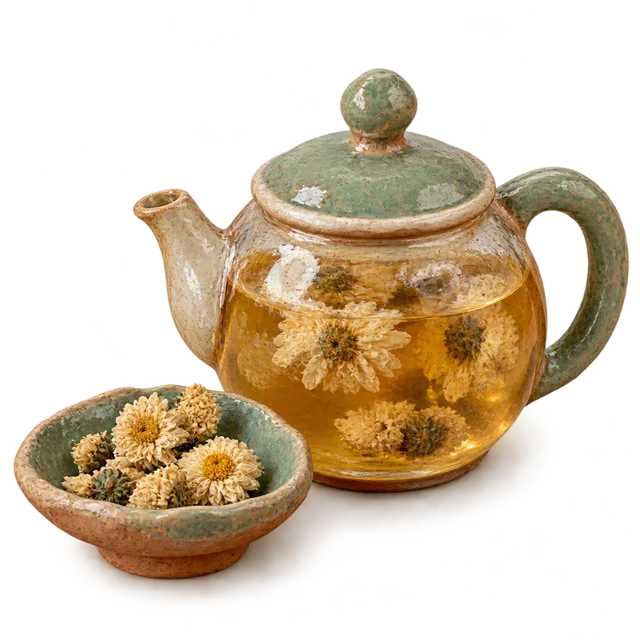
Yán zhēng chéngzi (盐蒸橙子)
Steamed orange
Cultural practice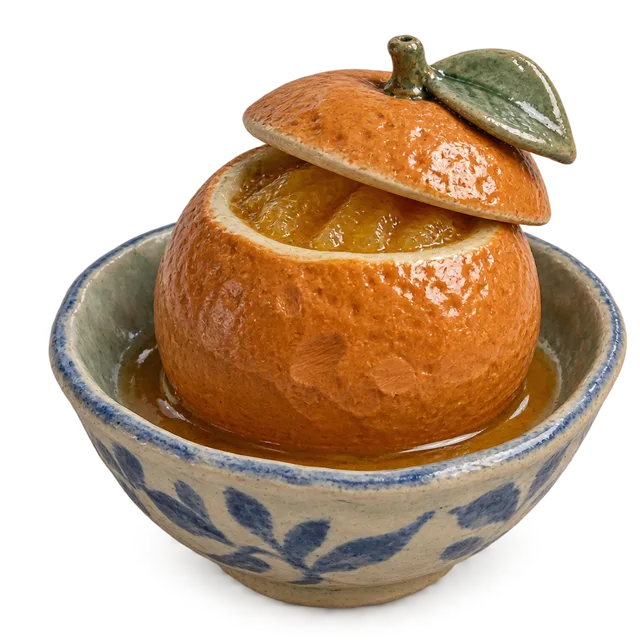
Jiāng cōng zhōu (姜葱粥)
Ginger and spring onion congee
Cultural practice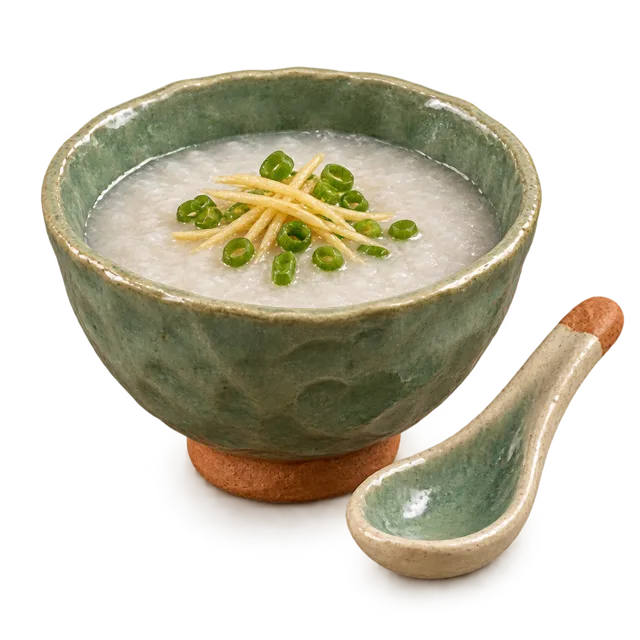
Shān zhā shuǐ (山楂水)
Hawthorn berry drink
Cultural practice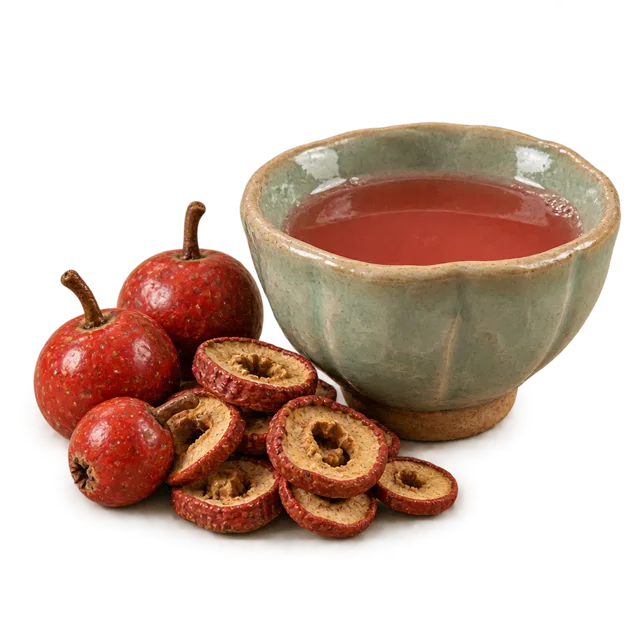
Àn nèiguān (按内关)
Pressing the inner-wrist point for travel sickness
Cultural practice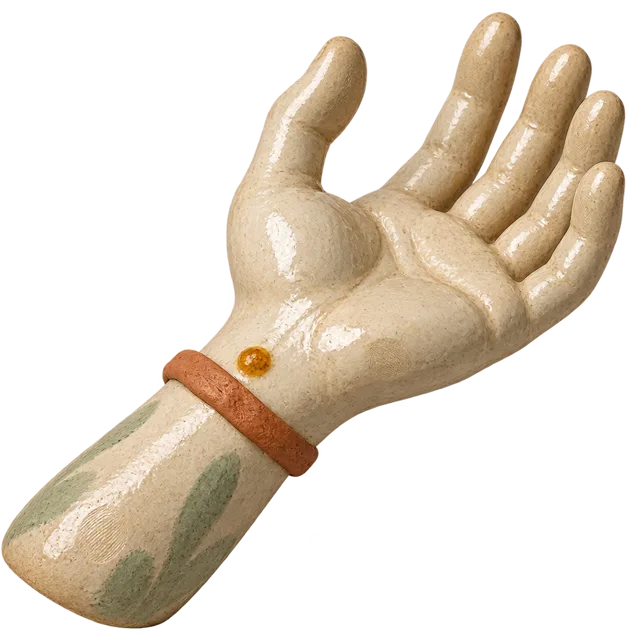
Miànbù guāshā (面部刮痧)
Facial gua sha stone massage
Cultural practice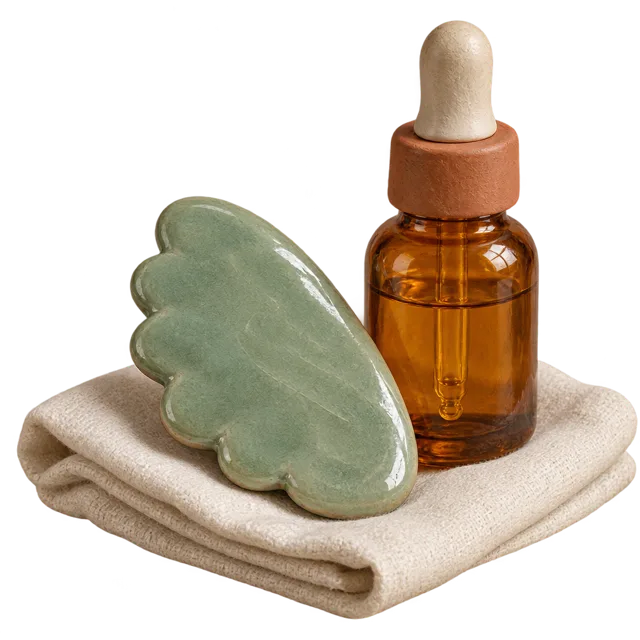
Ingredients in Chinese kitchens
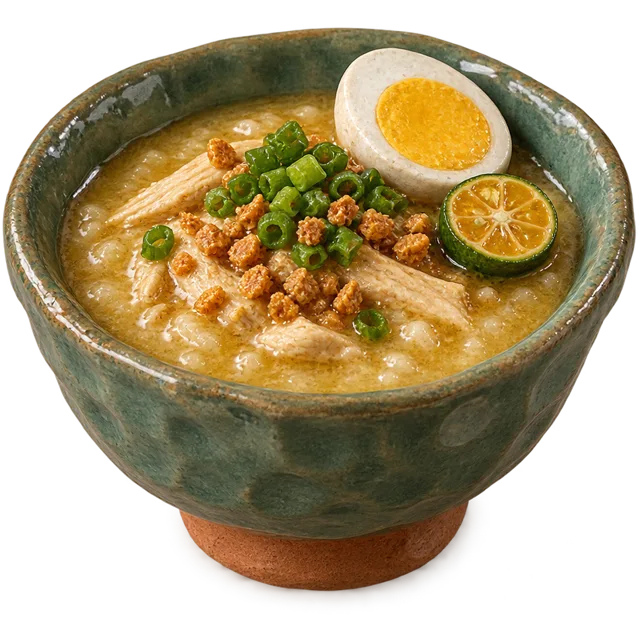 Arroz caldo
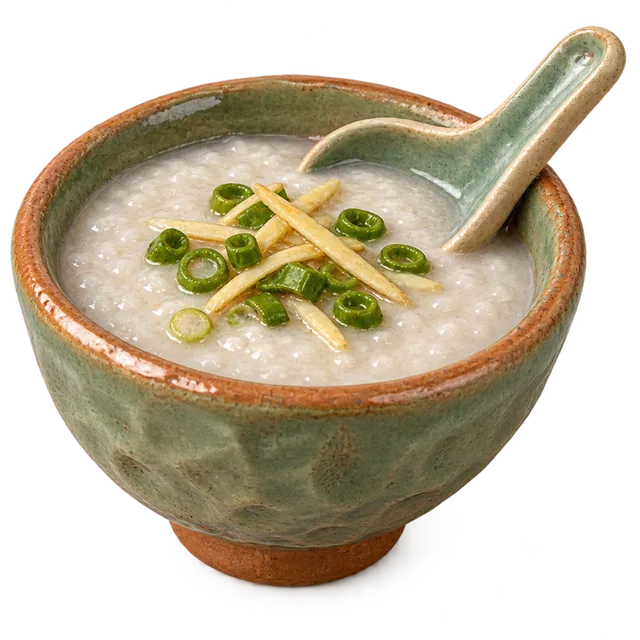 Congee
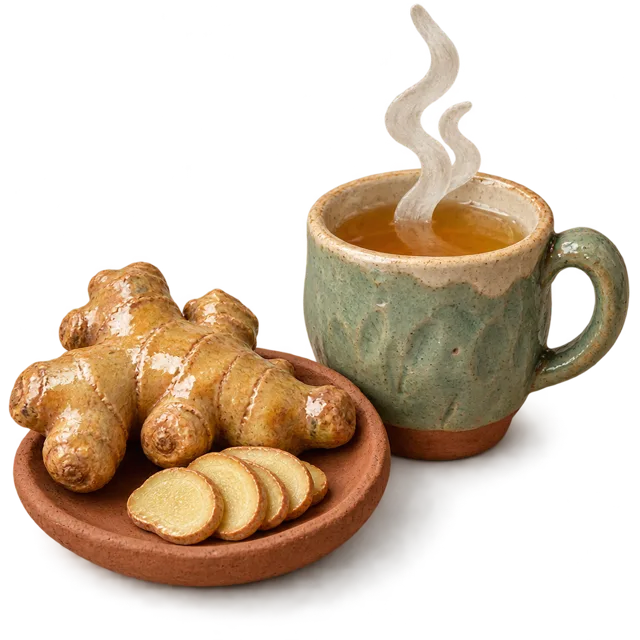 Ginger
 Rice water
Questions people ask
Is Traditional Chinese Medicine the same as Chinese home remedies?
No. Traditional Chinese Medicine is a clinical system with trained practitioners, acupuncture and herbal formulas. Chinese home remedies are the simple foods and drinks families make in the kitchen, which often borrow TCM ideas such as 'warming' foods.
Are Chinese herbal remedies safe?
The kitchen foods on our pages, like ginger, pear and rice, are ordinary foods. Concentrated Chinese herbal products are different: NCCIH warns some have been contaminated with heavy metals or mislabelled, and they can interact with medicines, so speak to a doctor or pharmacist first.
Do Chinese natural remedies work for colds?
There is little research on dishes like congee, steamed pear or ginger drinks for colds. Warm drinks and soft food can feel soothing, and ginger has some evidence for nausea, but none of these has been shown to shorten a cold.
Why do Chinese families avoid cold drinks when someone is ill?
In TCM-influenced thinking, cold food and drink are believed to weaken the body when it is already under strain, so warm water and soups are preferred. This is a cultural belief rather than something studies have tested.
Sources
- Traditional Chinese Medicine: What You Need To Know (NCCIH)
- Chinese food therapy (Wikipedia)
- Congee (Wikipedia)
- Tong sui (Wikipedia)
- Ginger (NCCIH)
By the Remedies by Culture editorial team · Last checked 1 October 2026 · Not medical advice, and not medically reviewed. How we work
The Remedy Atlas · digital book
How the world heals, honestly rated
127 remedies from 64 cultures, in one beautiful book. Each has its recipe, an honest evidence rating and clear safety flags.