North Indian home kitchens and the Ayurvedic tradition · Tea · 10 min
Mulethi (मुलेठी)
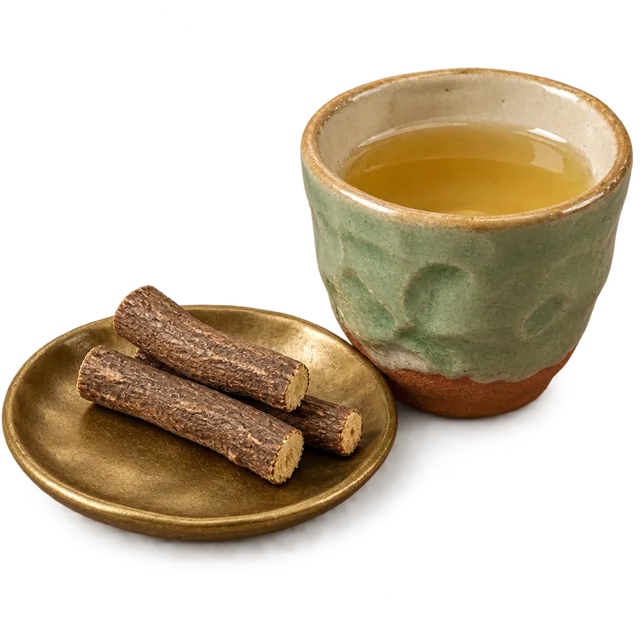
Liquorice root, chewed or brewed
Traditionally chewed or brewed to soothe a scratchy throat and loosen a cough. The European Medicines Agency accepts liquorice root as a traditional herbal medicine to help loosen a cough that comes with a cold, based on long use rather than strong trials. Liquorice can raise blood pressure and lower potassium, even in modest daily amounts, so it's only for short-term use by healthy adults.
Where it comes from
Mulethi, called yashtimadhu ('sweet stick') in Ayurveda, is the dried root of the liquorice plant. A stick of it to chew for a sore throat or a cough has been a grandparents' remedy in Indian homes for generations.
You'll need
- dried mulethi (liquorice) roota small piece, about 2 g
- water200 ml
How it's made
- 1Check the safety notes first: liquorice isn't for everyone.
- 2Simmer the root in the water for 5 to 10 minutes, then strain and sip warm. Some people simply chew a small piece slowly instead.
- 3Have no more than 2 or 3 small cups a day.
- 4Stop after a week; don't use it as an everyday drink.
What the evidence says
The European Medicines Agency accepts liquorice root as a traditional herbal medicine to help loosen a cough that comes with a cold, based on long use rather than strong trials. Liquorice can raise blood pressure and lower potassium, even in modest daily amounts, so it's only for short-term use by healthy adults.
Has an EMA traditional-use monograph: long, documented use, but not proven in trials.
Who should skip it
- 🤰 Avoid in pregnancy
- 🧒 For adults only (under 18s should skip it)
- 💊 Don't use it if you have high blood pressure, heart, kidney or liver disease, or low potassium
- 💊 Don't take it with water tablets (diuretics), heart medicines such as digoxin, steroid medicines or stimulant laxatives, which can worsen potassium loss; it can also counteract blood pressure medicines. Ask a pharmacist first
- 💊 Don't take other liquorice products (sweets, teas or supplements) at the same time
- 💊 Avoid it in pregnancy and while breastfeeding
- 💊 Adults only: the EMA doesn't recommend liquorice root medicines for under-18s. Use for no more than a week
- 🌼 Liquorice or pea-family (legume) allergy
- The cough gets worse or lasts more than a week while you're using it
- Headaches, swollen ankles or muscle weakness while taking liquorice
- A cough that lasts more than 3 weeks
- Coughing up blood, chest pain or shortness of breath
- Unexplained weight loss or a hoarse voice that won't go away
Sources
- Liquiritiae radix (liquorice root) (EMA)
- Licorice Root (NCCIH)
- Mulethi (Licorice Root): Science-Backed Benefits for Gut, Skin Immunity & More (Tata 1mg)
- Cough (NHS)
- European Union herbal monograph on liquorice root (Glycyrrhizae radix), revision 1 (EMA)
By the Remedies by Culture editorial team · Last checked 1 October 2026 · Not medical advice, and not medically reviewed.