
Field guide
How 16 countries soothe a sore throat
Gargles, warm drinks and sweet syrups: every kitchen has a way to ease a scratchy throat. Here's where each comes from and what the evidence says.
| Country | Remedy | Rating |
|---|---|---|
| Mexico | Cinnamon tea with lime and honey | Cultural practice |
| South Korea | Korean citron tea | Cultural practice |
| China | Steamed pear with rock sugar | Cultural practice |
| United States | Warm salt-water gargle | Cultural practice |
| United Kingdom | Hot honey and lemon drink | Studied |
| India | Spiced kitchen decoction | Cultural practice |
| Jamaica | Warm honey and lime drink | Studied |
| Haiti | Haitian spiced ginger tea | Cultural practice |
| Vietnam | Salted preserved lime drink | Cultural practice |
| Colombia | Hot panela and lime drink | Cultural practice |
| Croatia | Sage tea gargle | Traditional |
| New Zealand | Mānuka honey in warm lemon water | Studied |
| Kenya | Kenyan ginger tea | Cultural practice |
| Turkey | Boiled mint and lemon tea | Cultural practice |
| Iraq | Dried black lime tea | Cultural practice |
| Dominican Republic | Onion, apple and spice tea | Cultural practice |

1. Mexico · Home kitchens across Mexico
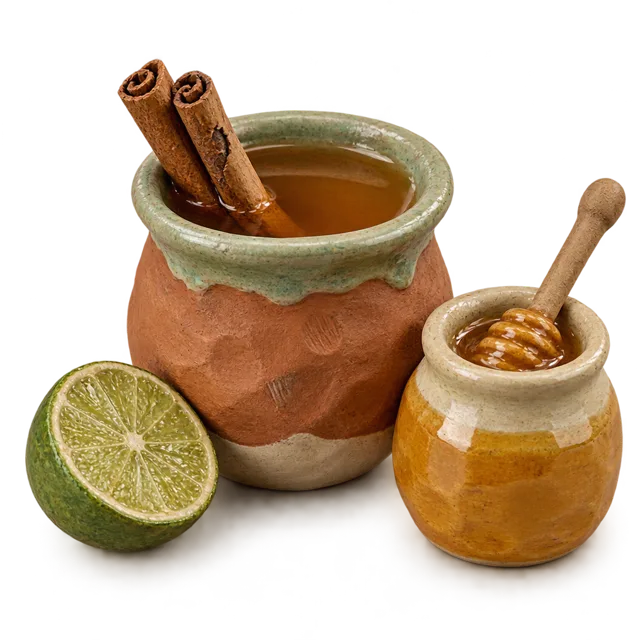
Té de canela con limón
Cinnamon tea with lime and honey
Traditionally sipped hot at the first sniffle to soothe a scratchy throat and warm up on a cold evening. Canela, the soft, flaky Ceylon cinnamon, is a staple in Mexican kitchens, and a pot of it simmering on the stove is a familiar sign that someone at home is under the weather. Many families add lime and honey, and some add a splash of tea or a few cloves.
Cultural practiceCinnamon itself hasn't been shown to help colds. The warm drink with honey and lemon or lime is the kind of soothing drink the NHS suggests for a sore throat, so the comfort is real even if the cinnamon isn't doing the work.Recipe, sources and who should skip it →
2. South Korea · Especially popular in winter; yuja grows on Korea's southern coast
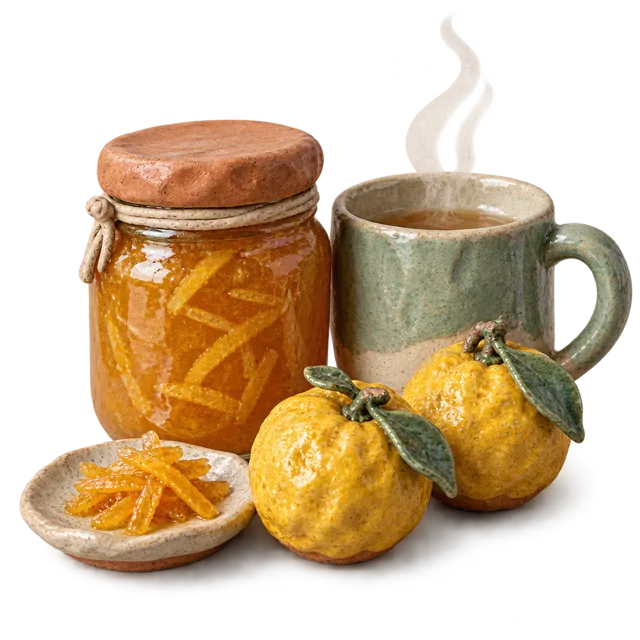
Yuja-cha (유자차)
Korean citron tea
Traditionally sipped through the winter to warm up and soothe a scratchy throat. Yuja is a fragrant, knobbly citrus (known as yuzu in Japan). Koreans preserve thin slices in honey or sugar to make a marmalade-like cheong, and a spoonful stirred into hot water is a standard winter drink in homes and cafés.
Cultural practiceYuja tea hasn't been tested for colds. It's a warm, honeyed drink, which the NHS lists as a way to soothe a sore throat.Recipe, sources and who should skip it →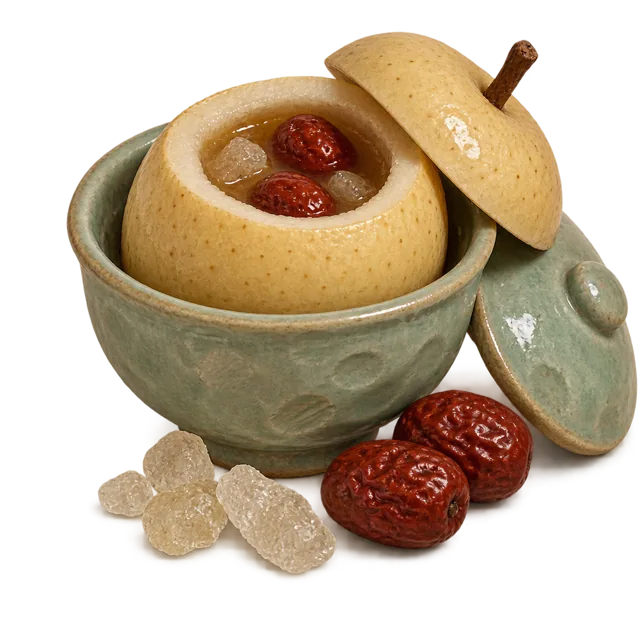
3. China · Home cooking across China, especially in the dry winter months
Bīngtáng dùn xuělí (冰糖炖雪梨)
Steamed pear with rock sugar
Traditionally eaten to soothe a dry, tickly throat and a dry cough in cold, dry weather. In Chinese home cooking, pears are thought of as moistening, and a steamed pear filled with rock sugar is a gentle dish grandparents make when the air turns dry. Many families add jujubes, goji berries or chuanbei (a dried bulb); ours keeps to kitchen basics.
Cultural practiceSteamed pear hasn't been studied for coughs or sore throats. Warm, soft, sweet food can feel soothing, and the NHS suggests soft foods and warm drinks for a sore throat.Recipe, sources and who should skip it →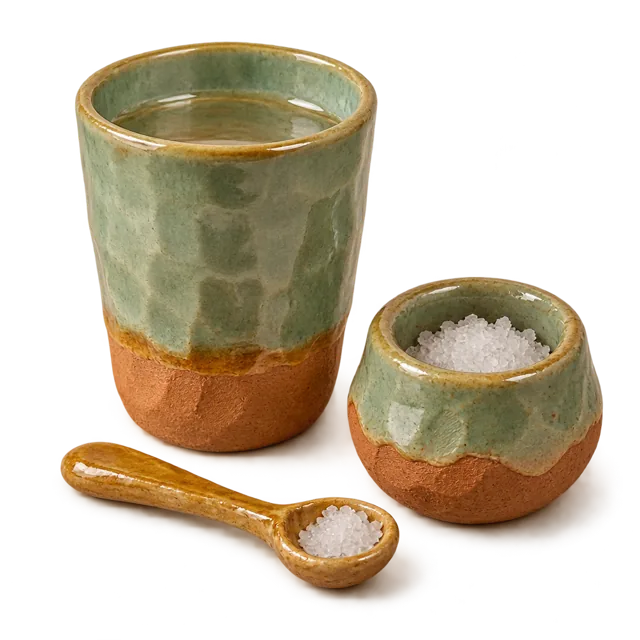
4. United States · A household standby across the US, the UK and far beyond
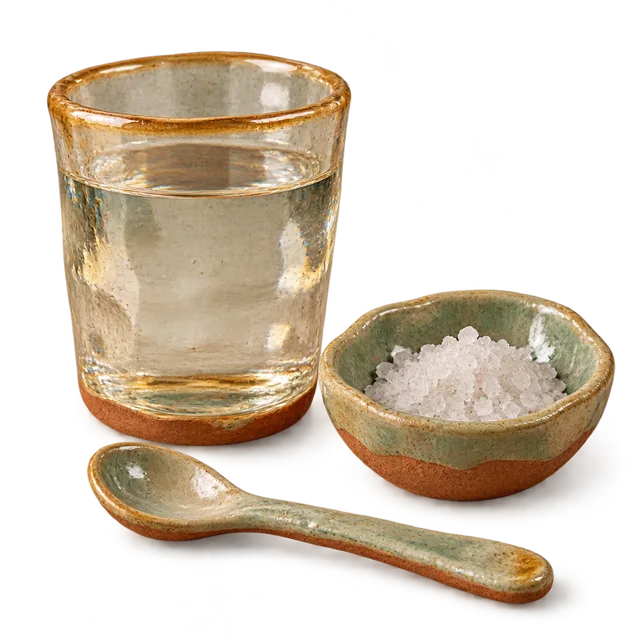
Salt-water gargle
Warm salt-water gargle
Traditionally used to soothe a sore, scratchy throat. Ask almost any grandparent in the US or UK what to do for a sore throat and 'gargle with salt water' comes first. Gargling is also a daily habit in Japan (ugai), where people gargle when they come home.
Cultural practiceSalt-water gargling hasn't been well studied, but the NHS lists it as a way for adults to soothe a sore throat. A Japanese trial found a plain-water gargling habit linked to fewer colds, though one trial isn't proof.Recipe, sources and who should skip it →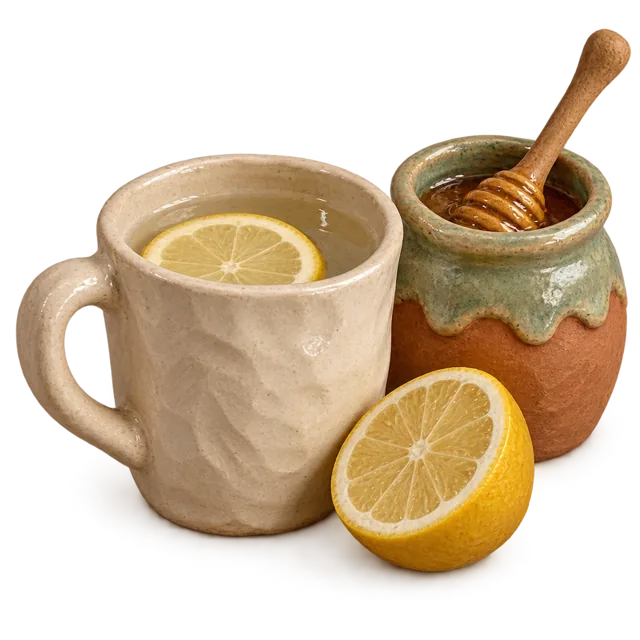
5. United Kingdom · Kitchens across Britain and Ireland
Hot honey and lemon
Hot honey and lemon drink
Traditionally sipped to soothe a cough and a sore throat during a cold. The mug of hot honey and lemon is so woven into British home life that the NHS gives the recipe on its common cold page. Variations add fresh ginger or a slice of orange.
StudiedReviews suggest some cough relief from honey, but much of the evidence is in children over 1; adult benefit is less certain. A broader review found benefits against usual care, while combined placebo results were inconclusive. This does not prove that honey and lemon shortens a cold.Recipe, sources and who should skip it →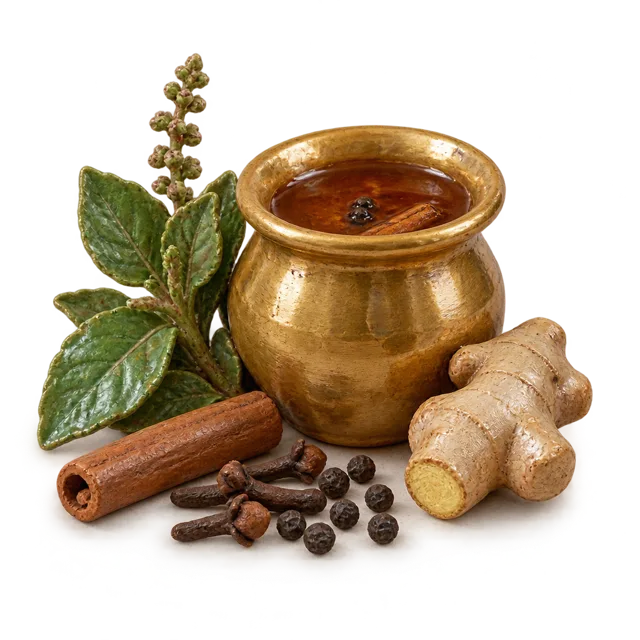
6. India · Home kitchens across North India, each family with its own recipe
Kadha (काढ़ा)
Spiced kitchen decoction
Traditionally sipped hot when a cough or cold sets in, especially as the seasons change. Kadha simply means a brew that has been boiled down, and every Indian kitchen has its own blend of tulsi, ginger, black pepper, cinnamon and cloves. It became even more common during the COVID-19 pandemic: in one survey of Indian COVID-19 patients, 59.6% of those who used home remedies or alternative medicine said they drank kadha.
Cultural practiceKadha hasn't been tested in good trials for coughs, colds or sore throats, and the survey that recorded how popular it is didn't measure whether it helped. It's a warm, spicy drink; very strong or frequent brews can upset the stomach.Recipe, sources and who should skip it →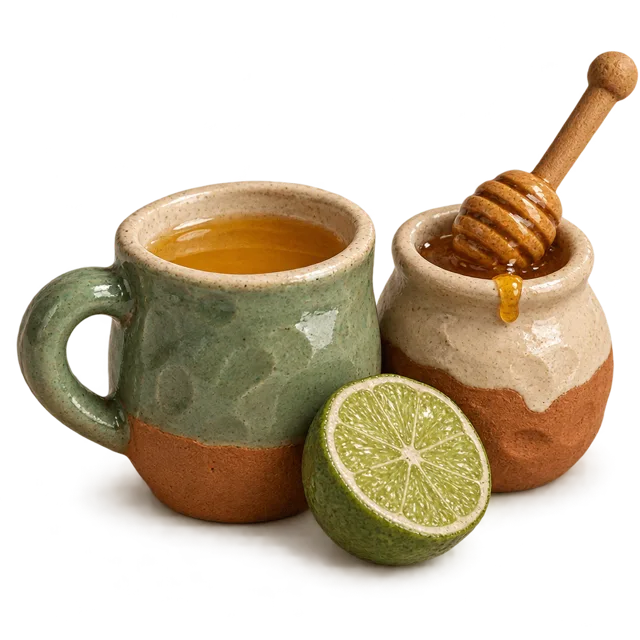
7. Jamaica · Homes across Jamaica, usually the first thing people reach for
Honey and lime
Warm honey and lime drink
Traditionally the first thing many Jamaicans reach for when a tickly throat signals a cold coming on. In Jamaica the cooler months mean cold and flu season, and for many families the response starts with a spoon of honey and lime at the first tickle in the throat, before the bush teas come out.
StudiedReviews suggest some cough relief from honey, but much of the evidence is in children over 1; adult benefit is less certain. A broader review found benefits against usual care, while combined placebo results were inconclusive. This does not prove that honey and lime shortens a cold.Recipe, sources and who should skip it →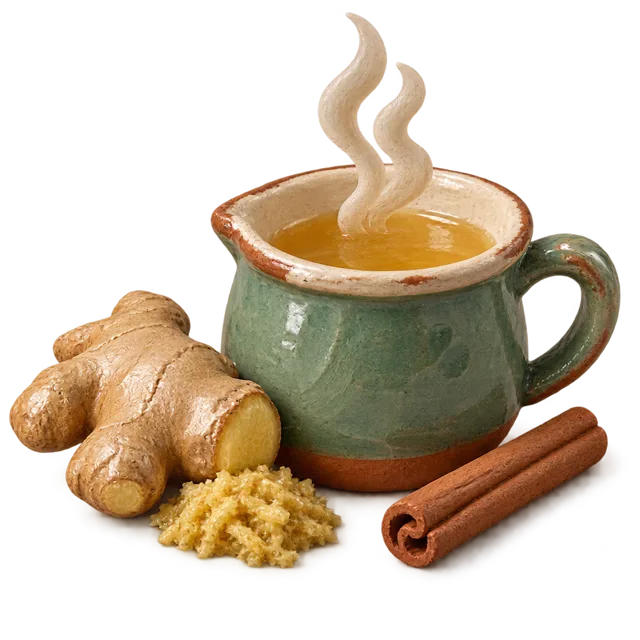
8. Haiti · Haitian homes, especially in the cooler months
Te jenjanm
Haitian spiced ginger tea
Traditionally drunk hot to warm up and soothe the throat when a cold comes on. Te jenjanm is a favourite in the cooler months, and every Haitian household has its own version; many cooks sweeten it with brown sugar rather than honey. In a 2024 survey of traditional plant use in Haiti, a brew of grated ginger root was among the remedies people named for colds and flu.
Cultural practiceGinger hasn't been shown to prevent or ease colds. A hot, sweet drink can feel soothing on a sore throat, and the NHS suggests warm drinks and rest.Recipe, sources and who should skip it →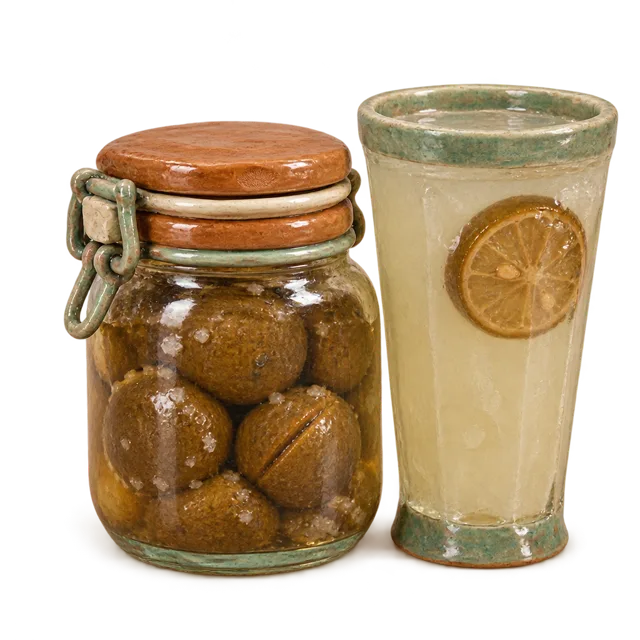
9. Vietnam · Vietnamese homes, where jars of salted limes are kept for months
Nước chanh muối
Salted preserved lime drink
Traditionally sipped warm for a scratchy, sore throat or a cough. Chanh muối are whole limes preserved in salt until they turn soft and brown. In Vietnam they're used to make a salty-sweet drink: iced on hot days, or warm as a folk remedy for a sore throat or a cough.
Cultural practiceCultural practice, not studied: there's no evidence that this salted drink eases or shortens a sore throat. Separately, the NHS advises drinking plenty of fluids when you have a sore throat, and notes that most adults already eat too much salt.Recipe, sources and who should skip it →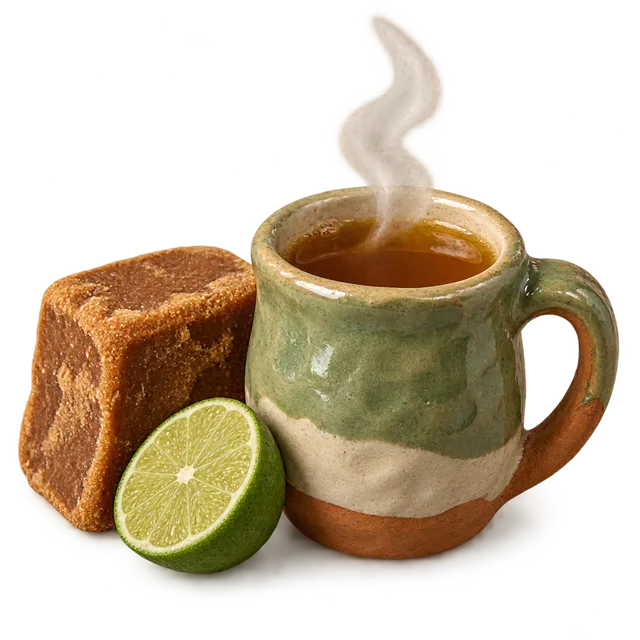
10. Colombia · The Colombian Andes, where aguapanela is an everyday drink and is served hot with lime for colds
Aguapanela con limón
Hot panela and lime drink
Traditionally drunk hot at bedtime for a cold or a scratchy throat, to 'sweat it out' and sleep. Aguapanela, simply panela dissolved in water, is so common in Colombia that it's drunk with breakfast, iced on hot days and given to children after school. When someone catches a cold, it's served hot with plenty of lime. A separate hot version has milk or a chunk of cheese added instead of the citrus.
Cultural practiceCultural practice, not studied. There's no evidence that 'sweating out' a cold works. A warm drink before bed fits NHS self-care advice for colds and sore throats, which centres on rest and fluids.Recipe, sources and who should skip it →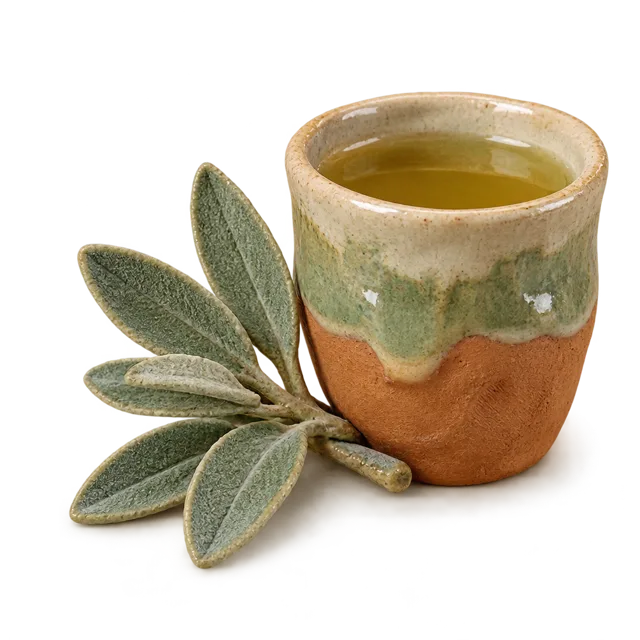
11. Croatia · Dalmatia and the Adriatic islands, where wild sage grows on the stony hillsides
Grgljanje čajem od kadulje
Sage tea gargle
Traditionally used as a warm gargle for a sore throat and for sore gums. Sage (kadulja), sometimes called Dalmatian sage, grows wild on Croatia's stony coast and islands. In some Croatian families, a warm sage gargle is a familiar home remedy for a sore throat.
TraditionalThe EMA recognises a sage leaf infusion used as a gargle as a traditional herbal medicine for inflammation in the mouth or throat, based on long use rather than strong trials.Recipe, sources and who should skip it →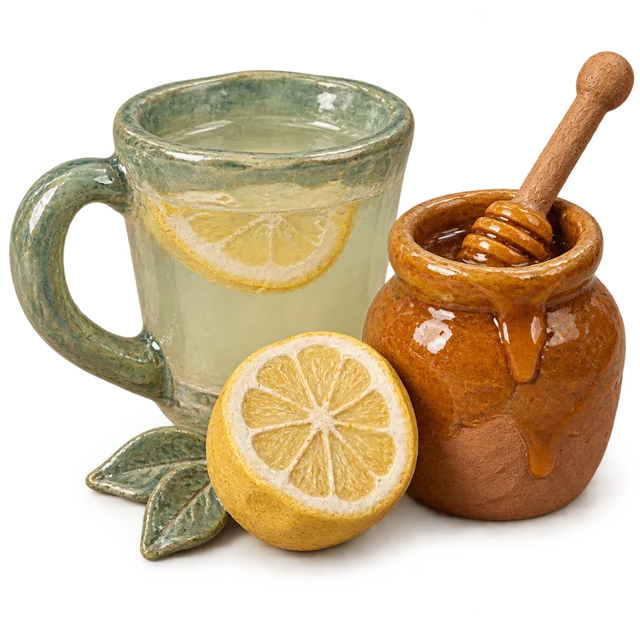
12. New Zealand · New Zealand, the home of mānuka honey, where a spoonful in warm lemon water is a familiar winter drink
Mānuka honey and lemon
Mānuka honey in warm lemon water
Traditionally sipped in winter to soothe a sore throat and a tickly cough during a cold. Mānuka honey comes from the nectar of the mānuka tree, which is native to New Zealand and parts of coastal Australia, and it has become one of New Zealand's best-known exports, often called 'liquid gold'. At home, many New Zealanders use it the simple way, stirred into warm lemon water when a cold sets in.
StudiedReviews found honey may ease cough a little better than usual care in people with colds and other upper respiratory infections, and a Cochrane review found it probably eases cough in children over 1, though the evidence is low to moderate quality. These reviews looked at honey in general: they don't show that mānuka works any better than ordinary honey for a cough or sore throat. The NHS says there's limited evidence that hot lemon and honey helps a cough, and the lemon mostly adds flavour.Recipe, sources and who should skip it →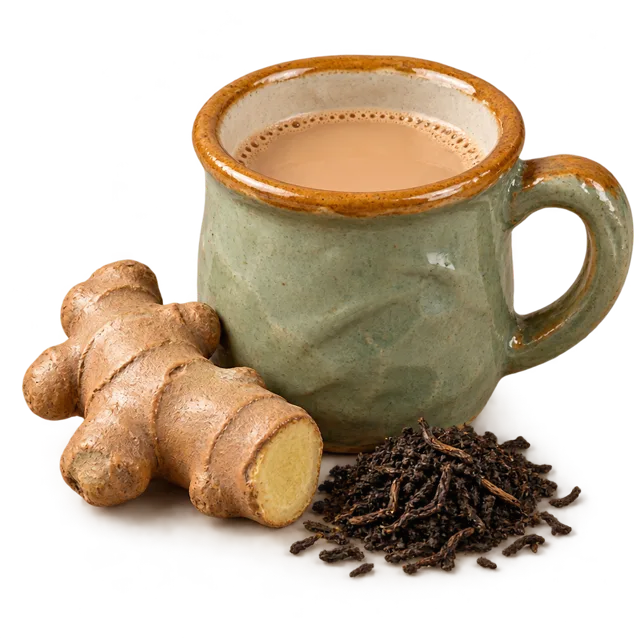
13. Kenya · Homes across Kenya, where milky black tea brewed with ginger is an everyday drink
Chai ya tangawizi
Kenyan ginger tea
Drunk every day in many Kenyan homes, and made a little gingerier when someone has a cold or scratchy throat. Chai ya tangawizi simply means 'ginger tea' in Swahili: strong Kenyan black tea simmered with crushed ginger and milk, often with cinnamon, cardamom or cloves. Ginger is a favourite comfort when someone in Kenya feels under the weather, and warm, gingery drinks sweetened with honey are a familiar way to soothe a throat during a cold.
Cultural practiceCultural practice, not studied: chai ya tangawizi itself hasn't been clinically tested for colds or sore throats, so we can't say whether it helps. A warm drink fits NHS self-care advice for colds (rest and plenty of fluids), and honey may ease a cough a little.Recipe, sources and who should skip it →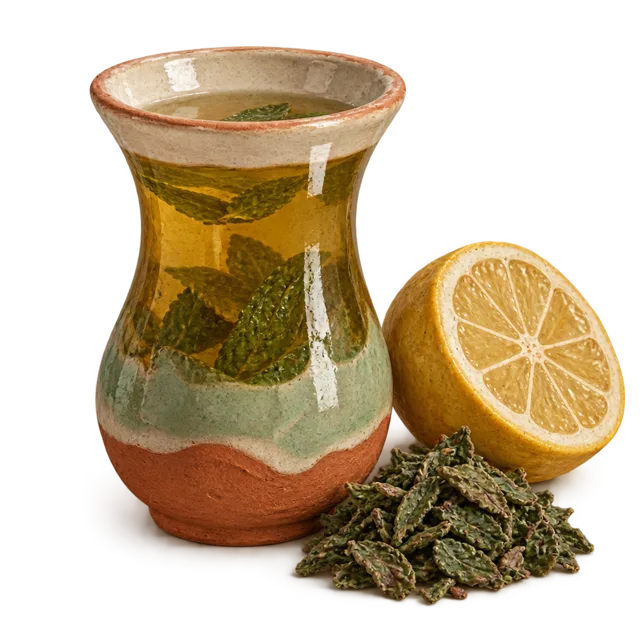
14. Turkey · Turkish homes, where a pot of nane limon goes on the stove in winter when someone has a cold
Nane limon
Boiled mint and lemon tea
Traditionally sipped hot in winter for colds and flu, and often for an upset stomach too. Nane limon (mint-lemon) is one of Turkey's best-loved home remedies: dried mint and chopped lemon boiled together in a small pot and strained into a glass. Hürriyet, one of Turkey's biggest newspapers, calls it a drink people turn to often in winter against flu and colds, with honey or a slice of ginger as popular extras.
Cultural practiceCultural practice, not studied: mint and lemon tea hasn't been tested for colds or flu. The dried mint used in Turkish kitchens isn't necessarily peppermint, and the trials of peppermint oil capsules (for IBS) don't tell us anything about a mint-leaf tea for colds. NCCIH says peppermint tea appears to be safe, though the long-term safety of large amounts is unknown. A warm drink fits NHS self-care advice for colds and sore throats, but there's no good evidence that this one shortens a cold.Recipe, sources and who should skip it →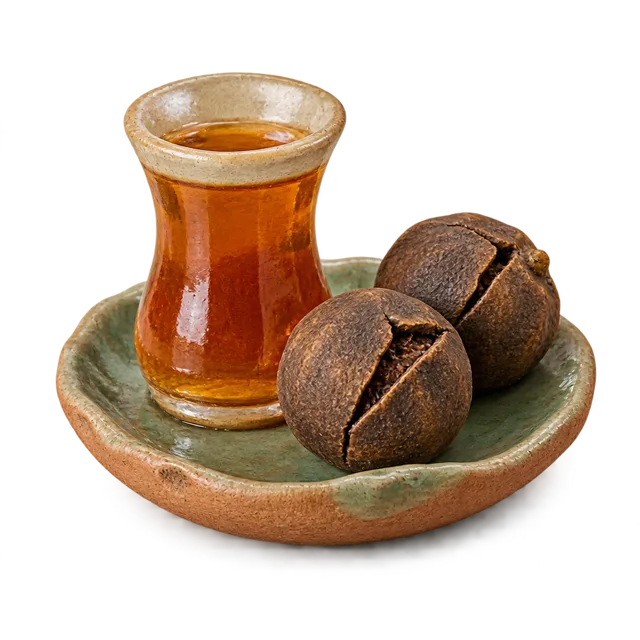
15. Iraq · Iraq and Iraqi families abroad; the dried limes take their name from Basra, the port they arrive through
Chai noomi Basra (شاي نومي بصرة)
Dried black lime tea
Traditionally sipped as a warm, sour-sweet drink when someone has a cold or a sore throat, as well as for an upset stomach. Noomi Basra is named after Basra, Iraq's only port city, through which dried limes from Asia reach the country, according to Iraqi food writer Nawal Nasrallah. She describes the sweet-and-sour amber tea as tremendously popular throughout the region, usually served in small, thin istikan glasses. The Iraqi food blogger behind Maryam's Culinary Wonders writes that her family drinks it hot in winter and iced in summer, and that some people make it when they have a cold.
Cultural practiceCultural practice, not studied: dried lime tea itself hasn't been tested for colds or sore throats. Its reputation rests partly on vitamin C, but a Cochrane review found that taking vitamin C once a cold has started had no consistent effect on how long it lasted or how bad it was. A warm drink does fit NHS self-care advice for colds (rest and plenty of fluids).Recipe, sources and who should skip it →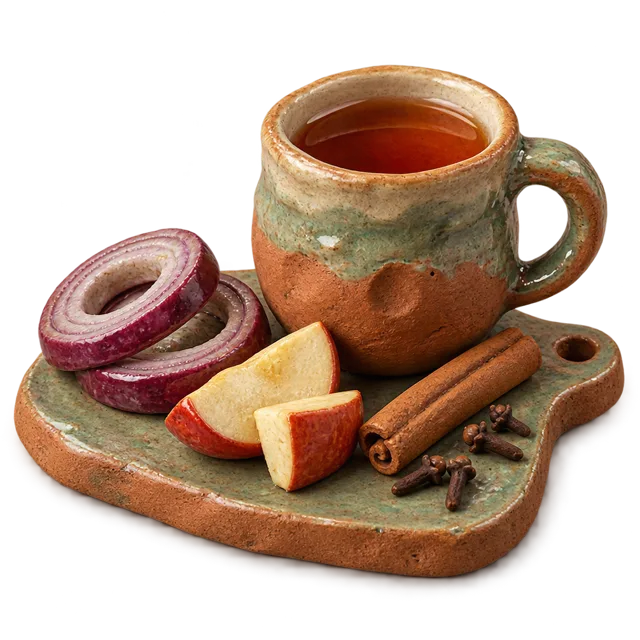
16. Dominican Republic · Dominican homes, in the Dominican Republic and in Dominican communities such as New York City
Té de cebolla (té dominicano)
Onion, apple and spice tea
Traditionally drunk as a warming tea for a cold and the sore throat that comes with it. This sweet-spiced onion tea is a familiar Dominican home remedy. Ethnobotanist Ina Vandebroek of the New York Botanical Garden learned the recipe while documenting how New York City's Dominican community uses plants, and notes that it is made only from food plants and spices sold in ordinary supermarkets. In the Dominican countryside, a morning cup of tea made from local plants has long been valued for warming up the body.
Cultural practiceCultural practice, not studied: this tea hasn't been tested for colds or sore throats. Its ingredients are everyday foods and spices; NCCIH says cinnamon is likely safe in food amounts, but that doesn't show the tea eases a cold. A warm drink does fit NHS self-care advice for colds (rest and plenty of fluids).Recipe, sources and who should skip it →
Ingredients to know
Explore by culture
The Remedy Atlas · digital book
How the world heals, honestly rated
Every remedy for your sore throat, and 127 in all from 64 cultures, in one beautiful book. Each has its recipe, an honest evidence rating and clear safety flags.
