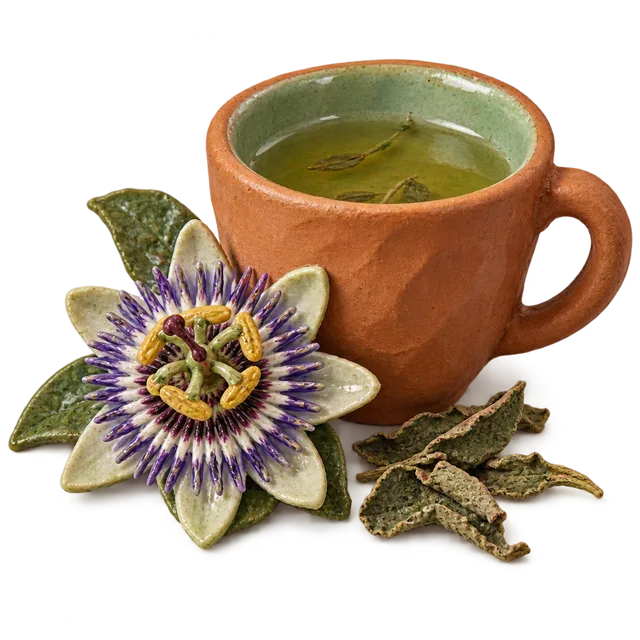
Mexican markets and pharmacies, where dried pasiflora is sold for 'los nervios' (nerves) and restless nights · Tea · 15 min
Té de pasiflora
Passionflower tea
Traditionally drunk in the evening to calm 'los nervios' and help with sleep. Passionflower is recognised by the European Medicines Agency for traditional use based on long use, not conclusive trials. NCCIH describes limited sleep research with mixed results for falling and staying asleep, and insufficient evidence for stress. This tea is a cultural wind-down practice, not proven to resolve persistent sleep problems.
Where it comes from
Passionflower, a climbing vine with extraordinary purple flowers, is native to the Americas; the species used in herbal medicine comes from the south-eastern United States. In Mexico, dried pasiflora is sold as a tea for 'los nervios' and restless nights.
You'll need
- dried passionflower herb (Passiflora incarnata), from a labelled pack; don't substitute another or unidentified Passiflora species1 to 2 g (1 tea bag, or weigh loose herb)
- just-boiled water150 ml
How it's made
- 1Pour the just-boiled water over the passionflower, cover and leave for 10 minutes.
- 2Strain, and let it cool until comfortably warm.
- 3Sip it slowly about half an hour before bed, as part of a wind-down routine.
- 4Adults only, for a few nights at a time. It can make you drowsy, so don't drive or use machinery afterwards. If poor sleep or stress lasts more than 2 weeks, see a doctor.
What the evidence says
Passionflower is recognised by the European Medicines Agency for traditional use based on long use, not conclusive trials. NCCIH describes limited sleep research with mixed results for falling and staying asleep, and insufficient evidence for stress. This tea is a cultural wind-down practice, not proven to resolve persistent sleep problems.
Has an EMA traditional-use monograph: long, documented use, but not proven in trials.
Who should skip it
- 🤰 Avoid in pregnancy
- 🧒 For adults only (under 18s should skip it)
- 💊 Don't use it in pregnancy: NCCIH warns it may cause contractions of the womb. The EMA doesn't recommend it while breastfeeding either
- 💊 It can cause drowsiness, dizziness and confusion (NCCIH), and may add to the effect of alcohol, sleeping pills and other sedating medicines
- 💊 Don't drive or use machinery if it makes you drowsy (EMA)
- 💊 Tell your surgeon or anaesthetist if you use it; NCCIH advises talking to a doctor if you've taken it within 2 weeks of surgery
- 💊 The EMA doesn't recommend it for children under 12
- 🌼 Passionflower allergy
- See a GP if poor sleep lasts for months and affects your day, or you snore loudly with pauses in your breathing
- See a GP if stress or worry lasts more than a few weeks, affects your daily life, or you feel low, hopeless or unable to cope
- Call 999 (UK) or 911 (US), or go to A&E/the ER, now if you feel you can't keep yourself safe or might harm yourself, or someone's life is at risk (NHS)
- If you need urgent help for your mental health but you're not in immediate danger, call NHS 111 and choose the mental health option, or ask for an urgent GP appointment (UK); in the US, call or text 988
Sources
- Passiflorae herba (passionflower) herbal monograph (EMA)
- Passionflower (NCCIH)
- A double-blind, placebo-controlled investigation of the effects of Passiflora incarnata (passionflower) herbal tea on subjective sleep quality (2011) (PubMed)
- Insomnia (NHS)
- Stress (NHS (Every Mind Matters))
- Where to get urgent help for mental health (NHS)
- 988 Suicide & Crisis Lifeline (988 Lifeline)
- Mexican pasiflora tea tradition (cultural context only; not evidence of benefit) (Infobae México)
By the Remedies by Culture editorial team · Last checked 4 November 2026 · Not medical advice, and not medically reviewed.