
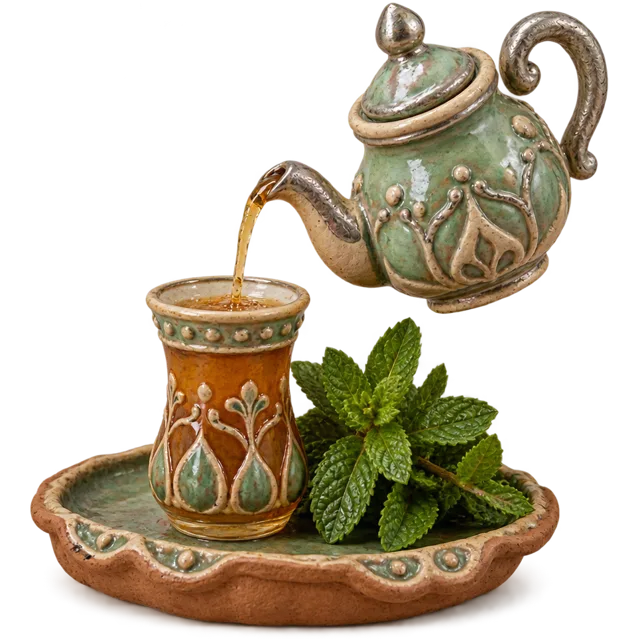
Homes and cafés across Morocco, poured from a height into small glasses after a meal · Tea · 10 min
Atay bi naanaa (أتاي بالنعناع)
Moroccan mint tea
Traditionally served after meals, and especially after rich ones, to settle the stomach and as a sign of welcome. Cultural practice, not studied. No trials have tested Moroccan mint tea for indigestion or bloating. It's made with spearmint, not peppermint, so the evidence on peppermint oil for gut symptoms doesn't carry over. The NHS suggests cutting down on caffeine and sugary foods if you're often bloated, and this tea has both.
Where it comes from
Mint tea, atay, is the drink of hospitality in Morocco and across the Maghreb: gunpowder green tea brewed with fresh spearmint and sugar and poured from a height so it foams in the glass. It's offered to guests, served at the end of a meal and drunk throughout the day. Recipes change from home to home, and some families add other fresh herbs in winter.
You'll need
- Chinese gunpowder green tea1 tsp (about 2 g)
- fresh spearmint (naanaa), washeda generous handful (about 10 g)
- sugar (optional; traditionally plenty, but go easy)1 to 2 tsp
- just-boiled water500 ml
How it's made
- 1Put the tea in a teapot, pour in a splash of just-boiled water, swirl and pour it away. This is the traditional 'wash' that takes the edge off the bitterness.
- 2Add the mint, sugar if you like, and the rest of the water. Leave it for 3 to 4 minutes.
- 3Pour a glass and tip it back into the pot to mix. Pour low and carefully at home: the high pour that makes it froth is part of the tradition, but hot tea poured from a height can splash and scald.
- 4Let it cool until comfortably warm, then sip a small glass slowly after a meal.
- 5It contains caffeine, so skip it in the evening if it keeps you awake.
What the evidence says
Cultural practice, not studied. No trials have tested Moroccan mint tea for indigestion or bloating. It's made with spearmint, not peppermint, so the evidence on peppermint oil for gut symptoms doesn't carry over. The NHS suggests cutting down on caffeine and sugary foods if you're often bloated, and this tea has both.
A real tradition we can document, but nobody has properly tested it.
Who should skip it
- 🤰 Pregnant or breastfeeding? Check with your midwife or doctor first
- 🧒 Not for children under 12
- 💊 Green tea contains caffeine. In pregnancy the NHS advises no more than 200 mg of caffeine a day from all drinks and foods, and caffeine passes into breast milk (NCCIH), so count it in your total
- 💊 Green tea in large amounts can lower blood levels of the heart medicine nadolol (NCCIH): ask a pharmacist if you take it or other prescription medicines
- 💊 Caffeine can make heartburn and sleep problems worse
- 💊 Traditional recipes are very sugary; keep the sugar light
- 🌼 Mint-family (Lamiaceae) allergy
- Call 999 (UK) or 911 (US), or go to A&E/the ER, now if tummy pain comes on very suddenly or is severe, it hurts to touch your tummy, you're vomiting blood or vomit that looks like ground coffee, your poo is bloody or black, sticky and very smelly, or you can't poo or fart
- Ask for an urgent GP appointment or call NHS 111 (in the US, see a doctor promptly) if a stomach ache gets much worse, keeps coming back, or comes with bloating that won't go away, trouble swallowing food, weight loss without trying, or bleeding from your bottom
- See a GP if indigestion or bloating keeps coming back, or you're often bloated
Sources
- Maghrebi mint tea (Wikipedia)
- Moroccan tea culture (Roaming Camels Morocco)
- Bloating (NHS)
- Indigestion (NHS)
- Green Tea (NCCIH)
- Foods to avoid in pregnancy (caffeine) (NHS)
- Stomach ache (NHS)
By the Remedies by Culture editorial team · Last checked 2 October 2026 · Not medical advice, and not medically reviewed.


