Homes across India, where tulsi is often grown in a pot by the door · Tea · 10 min
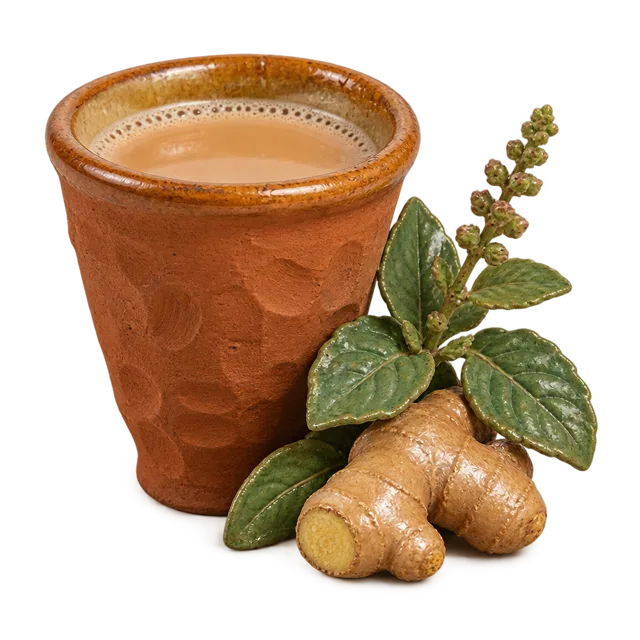
Tulsi adrak chai (तुलसी अदरक चाय)
Holy basil and ginger tea
Traditionally drunk to soothe a cough and the stuffy, achy feeling of a cold. A review of human studies on tulsi found small trials on things like stress and blood sugar, not on coughs or colds, and ginger hasn't been shown to help colds either. It's a warm, comforting cup.
Where it comes from
Tulsi is one of the most loved plants in Indian homes and is widely brewed as an herbal tea. When someone starts coughing, a handful of leaves and some grated ginger often go into the day's chai.
You'll need
- fresh tulsi (holy basil) leaves8 to 10
- fresh ginger, grated2 cm piece
- water250 ml
- black tea leaves (optional)1 tsp
- milk (optional)a splash
- honey or sugarto taste
How it's made
- 1Bring the water to the boil with the ginger and tulsi leaves.
- 2Simmer for 3 to 5 minutes, adding the tea leaves for the last 2 minutes if you like.
- 3Add a splash of milk if you take it, bring back to a simmer, then strain.
- 4Sweeten once slightly cooled and sip warm.
What the evidence says
A review of human studies on tulsi found small trials on things like stress and blood sugar, not on coughs or colds, and ginger hasn't been shown to help colds either. It's a warm, comforting cup.
A real tradition we can document, but nobody has properly tested it.
Who should skip it
- 🤰 Avoid in pregnancy
- 🧒 For adults only (under 18s should skip it)
- 💊 Pregnancy and breastfeeding: avoid medicinal tulsi brews. Their safety hasn't been established, and the clinical trials of tulsi haven't studied pregnant or breastfeeding women
- 💊 Tulsi may lower blood sugar a little; take care if you use diabetes medicines
- 💊 Ginger in large amounts may add to the effect of blood thinners
- 💊 This is an adult brew; we don't give it or any doses to children
- 🌼 Basil or mint-family allergy
- 🌼 Milk allergy (if using milk)
- 🌼 Pollen or bee-product allergy (honey)
- 🌼 Never give honey to a baby under 1
- A cough that lasts more than 3 weeks
- Cold symptoms that don't improve after 10 days, or a high temperature for more than 3 days
- Coughing up blood, chest pain or shortness of breath
- Unexplained weight loss or a hoarse voice that won't go away
- You have a long-term condition or a weakened immune system
Sources
- Ocimum tenuiflorum (tulsi) (Wikipedia)
- The Clinical Efficacy and Safety of Tulsi in Humans: A Systematic Review of the Literature (Evid Based Complement Alternat Med, 2017) (PubMed)
- Ginger (NCCIH)
- Cough (NHS)
- Common cold (NHS)
By the Remedies by Culture editorial team · Last checked 1 October 2026 · Not medical advice, and not medically reviewed.