A household habit in Korean homes, passed down alongside cooking · On the skin · 5 min
Ssal-tteumul (쌀뜨물)
Rice-rinse water face wash
Traditionally used as a gentle face rinse to leave skin feeling soft and smooth. Cultural practice, not studied as a face rinse. A small lab study found rice starch in bath water helped damaged skin recover its barrier, which fits the soft feel people describe, but that isn't the same as a kitchen rinse. It's gentle and low-risk.
Where it comes from
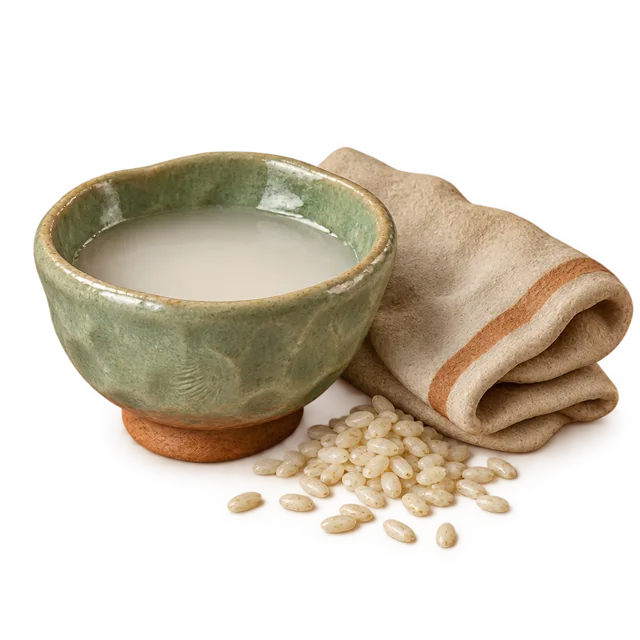
In Korean kitchens the cloudy water from washing rice has its own name, ssal-tteumul, and it was rarely wasted: it went into soups like doenjang jjigae, and was used to wash hands and faces. Rice ingredients are still a favourite in Korean skincare today.
You'll need
- uncooked white rice3 tbsp
- cool water250 ml
- soft cloth or cotton pad1
How it's made
- 1Patch test on your inner arm 24 hours before first use; dermatologists suggest testing for a week if it's something you'll use every day.
- 2Rinse the rice once with water and pour that water away.
- 3Add fresh water, swirl the rice with your fingers for a minute until the water turns milky, then strain it into a bowl.
- 4After washing your face as usual, splash or press the rice water onto your skin with the cloth.
- 5Leave for a minute, then rinse off fully with plain lukewarm water and pat dry.
- 6Use it the same day; starchy water goes sour quickly. Once or twice a week is plenty.
What the evidence says
Cultural practice, not studied as a face rinse. A small lab study found rice starch in bath water helped damaged skin recover its barrier, which fits the soft feel people describe, but that isn't the same as a kitchen rinse. It's gentle and low-risk.
A real tradition we can document, but nobody has properly tested it.
Who should skip it
- 🤰 Fine in normal food amounts in pregnancy
- 🧒 Fine for children in normal food amounts
- 💊 Rinse off fully; leftover starch can feel tacky or clog pores
- 💊 Don't use water that smells sour
- A rash that spreads, blisters or keeps itching after you stop using it
- Signs of infection: skin that's hot, swollen, painful or oozing
- A mole or dark patch that is new, changing shape or colour, bleeding or itchy
Sources
- 7 Uses for Rice Water (Kimchimari)
- Effect of rice starch as a bath additive on the barrier function of healthy but SLS-damaged skin and skin of atopic patients (PubMed)
- How to test skin care products (American Academy of Dermatology)
By the Remedies by Culture editorial team · Last checked 30 September 2026 · Not medical advice, and not medically reviewed.